Bangladesh faces a drug-prevention challenge shaped by illicit-market adaptation, youth vulnerability, punitive justice contact, treatment constraints, and relapse after residential rehabilitation. This study develops an integrated policy framework linking criminal justice, public awareness, treatment, and social reintegration. The study relied exclusively on secondary data: a convergent policy diagnostic combined 2022 Department of Narcotics Control administrative statistics with published aggregate findings from Bangladeshi adolescent and rehabilitation studies. Results reveal strong geographic concentration of narcotics cases, rapid growth in crystal-meth seizures alongside rising Yaba treatment admissions, distinct modifiable adolescent risk markers, and reported relapse reasons centered on family unrest, peer pressure, depressive coping, and craving. Dhaka, Rajshahi, and Chattogram accounted for 61.76% of 25,654 DNC cases, while Yaba-related treatment admissions rose 20.97% despite a 13.58% decline in seizures. Arrest, stigma, damaged family relationships, and social withdrawal further highlight reported reintegration barriers. The proposed framework redirects enforcement toward high-harm trafficking while embedding risk-targeted prevention, diversion, treatment linkage, family intervention, aftercare, and shared performance monitoring. The framework specifies an integrated prevention pathway for Bangladesh; its effectiveness requires prospective evaluation.
Research ArticlePublic Policy and Public HealthIn progress
Drug Prevention in Bangladesh: Integrating Criminal Justice, Public Awareness, and Rehabilitation into an Evidence-Based Policy Framework
Correspondence: mdbazlurrahman186@gmail.com
Abstract
Keywords Drug PreventionBangladeshCriminal JusticePublic AwarenessRehabilitationPolicy Integration
1. Introduction
Drug prevention in Bangladesh is a public health, criminological, youth development, border governance and social welfare issue. In 2022, the Department of Narcotics Control (DNC) recorded 25,654 narcotics cases, of which 61.76% were concentrated in Dhaka, Rajshahi, and Chattogram (see Section 5.1). Recent Bangladeshi studies reveal significant exposure to tobacco, alcohol and illicit drugs in adolescence and early adulthood, and differences between males and females, rural and urban areas, family context, health and educational transition [1]–[3]. The use of methamphetamine in Dhaka has also been associated with economic pressure, stigma, sexuality and social identity of excluded groups, which shows that drug use is not a simple matter of choice but is a social phenomenon [4, 5]. Studies from across the country also indicate that family problems, peer pressure, depressive coping and craving are linked to relapse [6]. These patterns create a prevention problem that includes initiation, exposure to the market, contact with justice, entry into treatment, relapse, and reintegration.
The supply situation in Bangladesh is unique. Its borders and transport corridors create exposure to trafficking, and the use of amphetamine-type stimulants and crystal meth has increased alongside cannabis, heroin and codeine preparations. Criminal-justice agencies are thus under pressure to stop supply, prosecute trafficking, and to respond to possession and use. However, enforcement is not equal to prevention. The study on legal and social consequences of relapse cases in Bangladesh revealed that there was a high prevalence of arrest history and stigma, family disruption, bullying and social exclusion among the relapse cases [7]. In addition, the nature of criminal activity also varies as a function of mobility and opportunity, further emphasizing the importance of separating short-term enforcement effects from long-term decreases in drug-related harm [8]. A framework that is primarily based on arrests or seizures can lead to a focus on system outputs as system outcomes.
The public-awareness pillar poses another challenge. There is school, community, media and civil society activity in Bangladesh, but exposure data does not provide much information about impact on behavior. The developmental timing, theory-informed content, parental involvement, peer engagement, school climate, counseling, and sustained implementation are all key components of international prevention research, not just information delivery [9, 10]. This is important because the adolescent studies in Bangladesh have identified modifiable risk environments such as poor family influence, peer environment, late night habits and heavy smartphone use [2, 3]. General warnings about drugs are thus not well suited to heterogeneous risk profiles. Prevention needs to be segmented by age, setting, vulnerability, and mechanism, and then have measurable behavioral goals.
There is a reciprocal relationship between criminal justice and treatment. Research on diversion from the criminal justice system suggests that diversion programs work best when eligibility criteria are well defined, services are accessible and available in a timely fashion, and there is intersectoral collaboration [11]. Studies of individuals with a history of incarceration also associate treatment during and after incarceration with reduced mortality and recidivism, depending on the type of service delivery [12]. These findings are significant when a person is arrested for use or low-level possession and does not receive standardized clinical screening, referral, or continuity of care. A justice response that recognizes trafficking intensity but does not differentiate between dependent use and commercial supply results in the lack of treatment for relapse drivers.
Access to treatment is still limited in low-and-middle-income countries. Barriers reported in reviews include low perceived need, stigma, cost, lack of family support, service availability, and poor continuity [13]. Community-based psychosocial studies focus on local accessibility and adaptation to resource and cultural conditions [14]. Task-sharing models involve trained non-specialist workers providing psychoeducation, motivational interventions, problem-solving, and coping-skills support with appropriate supervision [15]. The central question for Bangladesh thus changes from 'Is there rehabilitation?' to 'Is treatment systematically linked to justice referrals, family work, aftercare, education or employment reintegration, and relapse monitoring?'
The existing research is still siloed in policy areas. Adolescent studies help to elucidate risk markers, but do not often link them to national enforcement or rehabilitation design. Criminal-justice analyses are limited to cases, arrests, seizures or legal outcomes, and do not track treatment linkage and post-release recovery. Relapse and social outcomes are identified in rehabilitation studies, but are not well integrated with prevention communication and frontline justice decisions. Administrative and survey indicators are also based on different denominators, and so comparisons are misleading.
The missing link is the lack of a clear, measurable architecture between supply control, differentiated justice responses, risk-targeted awareness, treatment access, relapse prevention and reintegration. Therefore, the purpose of this study is to build an integrated, empirically-based drug-prevention policy framework for Bangladesh using a convergent secondary-data policy diagnostic approach. The Integrated Prevention–Diversion–Recovery (IPDR) framework connects these domains through defined referral, aftercare, and reintegration transitions. The analysis is guided by four objectives:
Characterise the geographic and drug-specific burden of the criminal-justice system;
Identify patterns of youth risk that are relevant to prevention;
Explore treatment demand, drivers of relapse and barriers to reintegration; and
Translate these domains into an integrated governance framework with measurable transition points.
The research questions focus on the location of enforcement burden, the modifiable factors that should be targeted for prevention, the point at which treatment-demand signals and supply-control outputs diverge, and the institutional linkages needed to decrease repeat harm. The contribution is a policy design that views prevention as a continuum of action instead of three distinct sectors, maintains denominator discipline and refrains from making causal statements that are not supported by the evidence. The framework is intended to be used at the national level, but it also allows for targeting at the divisional level, population-specific prevention, and varying the intensity of services.
2. Literature Review
2.1 Criminal-Justice Control, Differentiation, and Prevention
Drug-control scholarship distinguishes supply enforcement from responses to drug use as a health and social problem. Studies in Bangladesh show that there is a lot of contact with justice for people who have experienced relapses, and that arrest is often accompanied by unmet dependency needs, broken relationships and alienation [7]. International diversion research findings indicate that clear police eligibility criteria, quick referral pathways and reliable treatment partners are associated with better implementation [11]. Interventions for individuals with prior incarceration experiences also suggest that custody alone is an incomplete prevention strategy, while continuity of treatment between incarceration and release is linked to reduced mortality and selected recidivism outcomes [12]. The conceptual agreement is thus robust: there is a legitimate role for enforcement in trafficking disruption, but there is a need to differentiate user-level justice contact. The unresolved Bangladesh issue is operational triage. There are few published studies that indicate a standard pathway between trafficking, dependent use, experimental use, and co-occurring psychosocial need at the first point of justice contact. This omission makes arrest and case statistics ineffective prevention-performance measures. Another constraint is that the growth of seizures is a function of interdiction activity as well as market exposure, and an increase in seizures does not necessarily indicate a decrease in availability. Geographic case concentration also measures enforcement burden, not prevalence.
2.2 Public Awareness as Targeted Behavioral Prevention
Information exposure alone is not treated as an adequate prevention outcome in the prevention literature. In low-and-middle-income settings, school-based work is found to involve the following common program elements: education, parental involvement, peer engagement, school policy, school environment, and counseling [9, 10]. Community methamphetamine programs also rely on coalitions, local actors and intervention packages, not one-way communication [16]. There is another difference between campaign reach and behaviorally specified action that needs to be measured, and that is that audience segmentation, message design, distribution fidelity, service demand, and stigma reduction all need to be measured separately [17]. The results of reviews of mass-media alcohol campaigns show that there is a greater impact on awareness, knowledge and beliefs than on consumption, highlighting the risk of assuming that message recall equals successful prevention [18].
This is further supported by the findings of the adolescents in Bangladesh. Family influence, peer and school environment, lifestyle and psychosocial adversity are all associated with current and lifetime substance use [2, 3]. A national awareness strategy, therefore, needs to include risk targeting and referral messaging, as generic anti-drug messaging does not have a mechanism that links exposure to decreased initiation or increased help-seeking. Intermediate outcomes of program evaluation, then, include risk recognition, refusal skills, family communication, help-seeking, and referral uptake, and then substance-use outcomes at specified follow-up periods.
2.3 Treatment Access, Rehabilitation, and Continuity
Access, retention, psychosocial support and continuity are key mechanisms that are highlighted in treatment literature from resource-constrained settings. Factors that can hinder treatment include low perceived need, stigma, cost, limited availability of services, low motivation, and inconsistent family support [13]. Community-based psychosocial approaches focus on adapting to local resources and delivery contexts [14] and task-sharing models involve non-specialist workers providing psychoeducation, motivational support, problem-solving, and coping interventions, supervised by a specialist [15]. The research on contingency-management also supports structured reinforcement of treatment-related behavior, but implementation resources and transferability vary across settings [20]. Low-threshold treatment experience also highlights the importance of social cohesion, voluntary psychosocial services and treatment architecture in treatment retention [21]. These studies all concur that admission to a facility is just one step in a more extended recovery process. The situation is different in the case of rehabilitation research in Bangladesh, where information on relapse after treatment is more available than information on treatment fidelity, discharge planning, community follow-up, employment linkage, and sustained clinical outcomes [6]. This methodological gap restricts the evaluation of the protective factors for rehabilitation against recurrence. Residential care also focuses resources at a single time, while post-discharge risk occurs in the home, community, school, and workplace. Continuity indicators are thus crucial for rehabilitation as a prevention strategy.
2.4 Relapse, Stigma, and Social Reintegration
Relapse is not a single treatment failure, but rather a complex process that is influenced by clinical and social mechanisms. The most common reasons reported after treatment identified by nationwide Bangladesh findings include family unrest, peer pressure, depressive coping, and craving [6]. Arrest, poor family interaction, poor relationships, stigma, bullying and social withdrawal are all found in the same national context documents, but in separate analysis [7]. This profile is similar to other studies that found stigma to be a structural barrier that hinders treatment engagement, harms self-concept, and perpetuates inequity [19]. The methamphetamine studies in Bangladesh provide context, revealing that drug use among sexual and gender minorities (SGMs) is associated with a sense of stigma reduction, income, sexual expectations, and identity performance [4].
These results challenge the models of punitive deterrence: sanctions that increase the likelihood of further exclusion, but do not address the social role of drug use, risk maintaining conditions that lead to further drug use. Reintegration should thus be part of prevention and not post prevention. Relapse prevention mechanisms that are directly relevant to repeat justice contact include family stabilization, peer-network change, mental-health support, livelihood or education linkage, and stigma reduction. This interpretation also accounts for the presence of family and peer variables both prior to initiation and following treatment: the same social environment is a risk context at multiple stages of the pathway.
2.5 Integration and Measurement Gap
The main contradiction is institutional, not conceptual, across the literature. Developmental and social risk are the focus of prevention studies, differentiation and diversion are the focus of justice studies, and access and continuity are the focus of treatment studies. However, these domains are assessed using different results. The number of cases, arrests, seizures, operations, and treatment admissions are recorded in Bangladesh administrative systems while prevalence, associations, reasons for relapse, and social consequences are estimated through surveys. None of these indicators alone is an indicator of prevention impact. Therefore, the best synthesis will be achieved by a pathway model that still has explicit denominators for enforcement outputs, prevention exposure, treatment linkage, relapse, and reintegration. Mechanisms identified in other low-resource countries may inform Bangladesh, but their transferability depends on referral and governance capacity. In principle, integration is supported by international evidence [11], [14] and [15] while the transitions to be addressed are revealed in the Bangladesh data [2], [6] and [7]. What is not yet clear is a measurable policy architecture that defines responsibility for each transition and connects the activity in each pillar to common prevention outcomes. Table 1 summarizes the agreements, contradictions, methodological weaknesses and gap that remain across these domains.
Table 1. Critical Synthesis of the Literature by Policy Domain
| Policy domain | Prevailing Agreement | Contradiction / Weakness | Bangladesh-Specific Unresolved Gap |
|---|---|---|---|
| Supply and justice | High-harm trafficking requires focused enforcement; use-related need requires differentiated response [11], [12]. | Arrest or seizure volume is often treated as success without tracing service linkage. | No shared justice-to-screening/referral performance denominator. |
| Risk-targeted prevention | Developmental timing, family/peer context, school delivery, and sustained implementation matter [9], [10], [16]. | Broad awareness frequently measures reach or recall rather than behavior or help-seeking [17], [18]. | Observed youth risk markers are not routinely tied to segmented prevention metrics [2], [3]. |
| Treatment access | Access reflects motivation, affordability, family support, availability, and continuity [13]–[15]. | Admission counts omit unmet need, treatment completion, and post-discharge continuity. | Justice referral, non-specialist delivery, and continuity indicators remain disconnected. |
| Relapse and reintegration | Relapse reflects social, affective, and craving mechanisms; stigma obstructs recovery [6], [19]–[21]. | Clinical and social outcomes are often separated from release, family, and livelihood pathways. | Family unrest, peer pressure, stigma, and exclusion lack a common aftercare response [6], [7]. |
| Integration and measurement | Coordinated handoffs and compatible indicators are required across sectors [11], [14], [15]. | Different datasets use incompatible denominators and institutional output measures. | Responsibility for each transition and its measurable result remains unspecified. |
The synthesis identifies transition measurement, rather than absence of sectoral activity, as the recurrent unresolved problem.
3. Conceptual or Theoretical Framework
This study uses an Integrated Prevention–Diversion–Recovery (IPDR) framework to depict drug prevention as a system of interconnected institutional activities, instead of a series of discrete activities. The framework includes developmental prevention logic, differentiated response to justice, mechanisms to access treatment and recovery-oriented reintegration. Prevention research in schools and communities confirms that behavior occurs through dynamic processes among family, peer, institutional, and individual factors, and diversion research suggests that a set of essential conditions—timely service linkage and intersectoral coordination—is necessary for diverting youth from repeated involvement in the juvenile justice system. Motivation, costs, family support, service availability and service continuity are additional pathway determinants added to treatment-access research [13]. Stigma research provides a cross-cutting mechanism as the process of labeling and exclusion has an impact on help-seeking, treatment engagement and reintegration [19].
The five constructs are interrelated in the IPDR framework. First, interruptions in supply focus the intensity of the criminal justice system on trafficking networks, high harm distribution, and new markets in drugs. Second, differentiated justice triage distinguishes trafficking from dependence- or use-related clinical need, leading to screening and referral when there is a clinical need. Third, primary prevention through schools, families, peers, digital environments and local organizations tackles modifiable youth and community risk factors in a risk-targeted manner. The fourth part, treatment and rehabilitation, involves clinical stabilization, family intervention and continuity planning as well as psychosocial care. Fifth, reintegration and feedback link discharge/release to aftercare, education, employment, community support, relapse monitoring and shared performance data.
Figure 1 shows the hypothesized relationship between these constructs and four outcomes: decreased initiation, decreased repeat justice contact, increased treatment engagement, and decreased relapse.
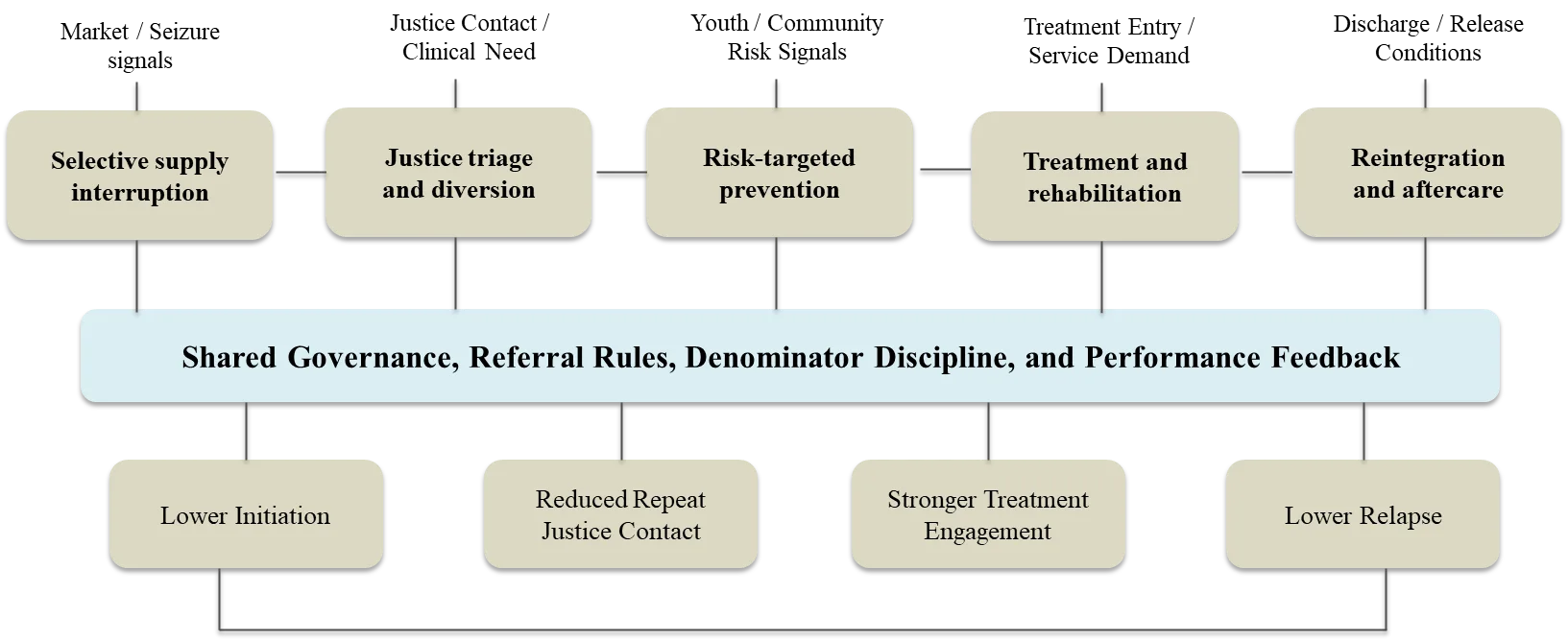
It is analytically relevant to the feedback loop we will discuss because the patterns of case concentration, new drug seizures, treatment admissions and relapse patterns indicate different pressures on the system. There is no single indicator that is used as a measure of prevention success. Rather, the framework assesses if individuals transition between institutions at clearly defined transition points, and if each pillar covers the mechanism identified by its population-level or service-level indicators.
The framework thus takes a complementary approach and not a substitutional approach. Without treatment linkage, clinical needs may remain unmet; without risk segmentation, awareness is not backed up by behavioral targeting; without aftercare, rehabilitation leads to the re-exposure to unchanged relapse environments. Policy coherence occurs when the three pillars of justice, prevention, and treatment and reintegration have the same rules for referrals, indicators, and responsibility for the transition. The integrated structure also allows for implementation failure to be measured: every referral missed, every handoff not complete, every follow-up not made is measurable and visible as a failure in the prevention pathway. Its analysis is useful when it comes to identifying responsibility, the origin and destination of every transition, the population of interest, and the measurable handoff outcome.
4. Methodology
4.1 Research Design and Analytical Logic
The research problem is about coordination of justice, prevention, treatment, and reintegration; hence a convergent secondary-data policy diagnostic was chosen. The design includes administrative counts and published results of survey and rehabilitation data, but maintains the original denominators. No individual-level datasets were merged, and no new participants were recruited. Analysis was carried out concurrently in each of the four policy fields and then using structured convergence at the IPDR transition points. The approach provides inference about a policy without expressing any administrative outputs in terms of causal effects. The principal administrative reference year was 2022 because within-year indicators were available for justice, seizures, treatment, and prevention services.
4.2 Setting, Units of Analysis, and Data Sources
The setting was Bangladesh, and the units of analysis depended on the objectives. National and divisional DNC data was utilized in criminal-justice analysis, while verified aggregate data based on a high school survey and a university-admission test-taker survey was used in prevention analysis, and a nationwide relapse study conducted through 138 rehabilitation centers and its associated legal and social analysis was utilized in rehabilitation analysis. Comparative 2021 values were only provided where the 2022 administrative report provided a consistent prior year value. Table 2 shows the source to variable mapping and further categorises administrative activity, population exposure, demand for treatment and rehabilitation outcomes.
Table 2. Source-to-Variable Map and Denominator Discipline
| Objective / domain | Unit or population | Primary variables | Source type | Denominator discipline | Analytical use |
|---|---|---|---|---|---|
| Justice workload | National and divisional DNC activity, 2022 | Case counts; divisional shares | Administrative | DNC cases only | Concentration and operational burden |
| Market / treatment signals | Selected DNC/all-agency indicators, 2021–2022 | Drug-specific seizure and admission change | Administrative | Drug/year-specific values | Signal divergence |
| Youth prevention | 424 high-school adolescents | Lifetime/current use; selected odds ratios | Published aggregate survey | Study sample | Exposure gaps and risk targeting |
| Youth context | 1,485 university-admission test-takers | Past-year substance-use prevalence | Published aggregate survey | Study sample | Contextual triangulation |
| Relapse | 911 relapse cases recruited through 138 rehabilitation centers | Relapse reasons; substance profile | Published nationwide study | Relapse sample | Post-treatment mechanisms |
| Reintegration | Nationwide rehabilitation sample; item-specific valid responses | Arrest and social consequences | Published nationwide study | Item-specific valid n | Legal/social barriers |
Note. Sample sizes and counts are not percentages; each source retains its own population and denominator.
The table shows that each source answers a different policy question; convergence therefore occurs through IPDR transition points rather than numerical pooling.
4.3 Variables and Operational Measures
The measures of criminal-justice burden included divisional narcotics cases, national case concentration, and selected drug-seizure change. Supply indicators consisted of crystal-meth seizures, Yaba seizures and heroin seizures. Prevention variables included lifetime and current smoking, use of illegal drugs, alcohol use, and reported risk associations including sex, ownership of a smartphone, and eating fast food, family influence, and other lifestyle risk factors. Yaba and heroin admission change were reported as treatment indicators, along with reported patient counts for cannabis and codeine preparations, and for injecting-drug use. The rehabilitation variables consisted of main reasons for relapse and common substances for those who had relapsed. Among the reintegration variables, there were arrest, family interaction, damaged family relationships, stigma, bullying, social withdrawal, leaving home, and divorce. The denominator and the scale of each measure were preserved.
4.4 Derived Indicators and Descriptive Analysis
Only descriptive calculations were made. Case share by division was carried over from the administrative report and compared with the national level. Top three case concentration was obtained by adding up the cases from the three divisions of Dhaka, Rajshahi and Chattogram and dividing it by all DNC cases. Year-to-year change (when raw values were available) was calculated using the standard formula for percentage change:
Lifetime–current gaps were calculated by subtracting current prevalence from lifetime prevalence, expressed in percentage points. Odds ratios and confidence intervals were not re-estimated, but were reported as they appeared. Due to the variation in sampling frames, measurement windows, and populations, no cross-source pooled prevalence estimates, significance tests, regressions or causal coefficients were generated.
4.5 Cross-Pillar Integration Procedure
Following the domain-specific description, findings were mapped to five IPDR transition questions:
Was there an enforcement finding of high harm market pressure?
Was there a finding of frontline justice separating supply activity from treatment need?
Was there a finding of awareness content aligned to observed modifiable risks?
Was there a finding of treatment addressing documented relapse mechanisms?
Was there a finding of discharge/release linkages to reintegration support?
The observed signals were categorized as activity measure, coverage measure, linkage measure, continuity measure, or outcome measure. Where an activity signal was not matched with a linkage or outcome indicator, gaps in integration were documented. This rule was not meant to be read as a sign of prevention success alone, if there were high numbers of cases, high numbers of events held or high numbers of people being treated. The final action matrix associates each gap with a proposed transition response and a measurable performance indicator. Gaps that were present in multiple domains or gaps that involved a transition with direct implications for recurrence were given priority.
4.6 Bias Control, Robustness, and Validity
Multiple safeguards aimed at controlling predictable secondary data biases. Seizures were not used as indicators of drug availability or prevalence, but instead were viewed as interdiction signals. Case counts were interpreted as justice workload, not incidence of substance use, and were influenced by enforcement intensity. Treatment admissions were proxy measures for service demand (admission to services, not population-level dependence). Arrest proportions were not treated as incarceration rates or as estimates of the probability of transition between justice stages. Differences in populations, instruments and recall windows prevented the survey estimates from being treated as national trends. Reported associations were referred to as published associations, not as causal determinants. Convergence was only accepted if there was shared support across multiple sources for a plausible mechanism and no need for numerical pooling. No attempt was made to "average out" contradictory indicators, but rather, they were retained as policy-relevant divergence.
4.7 Ethics and Reproducibility
The study used public administrative aggregates and previously published anonymized results; no direct participant recruitment, intervention, identifiable record, or new human-subject contact occurred. Original study ethics remained the responsibility of the source investigations. No new participant informed consent was sought for this secondary aggregate analysis. Reproducibility requires a structured source-data record containing every value used in quantitative figures, explicit formulas for derived percentages, and labels for source population and denominator.
Figure 2 summarizes the analytical workflow from source separation through domain analysis, denominator checks, convergence, and construction of the integrated policy matrix.
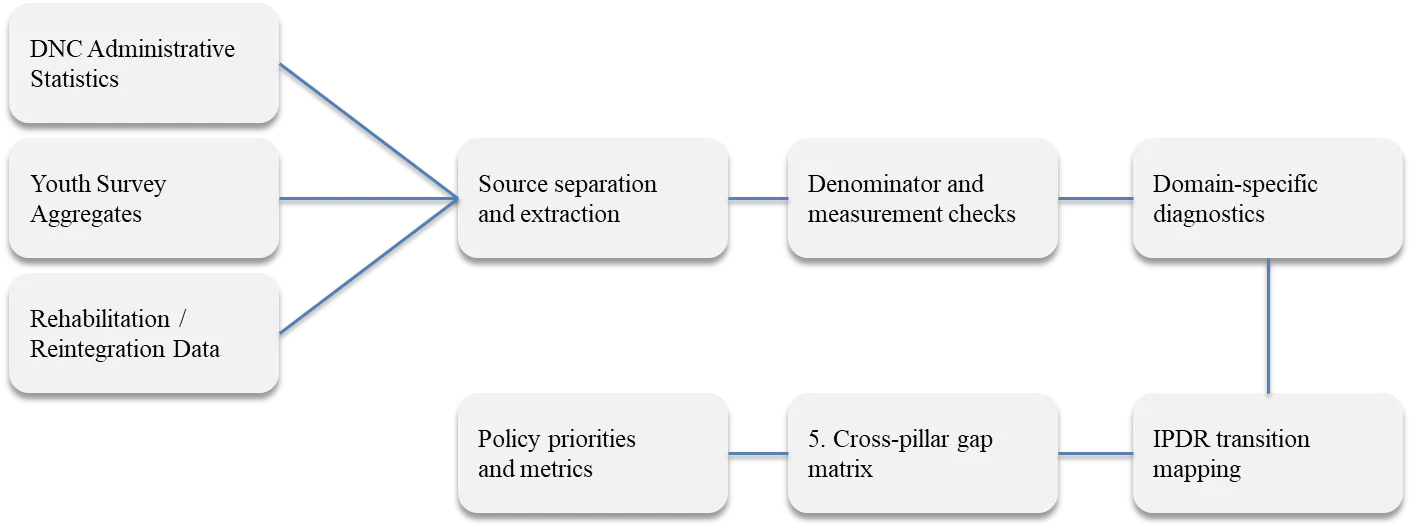
The workflow prevents untraceable transformation between original values and final policy interpretation.
5. Results
5.1 Geographic Concentration of Criminal-Justice Workload
The analysis examines where DNC narcotics cases were concentrated in 2022 because geographic concentration determines where enforcement workload, screening capacity, and referral infrastructure face the greatest pressure. Figure 3 illustrates the divisional distribution of 25,654 DNC cases and addresses the first objective.
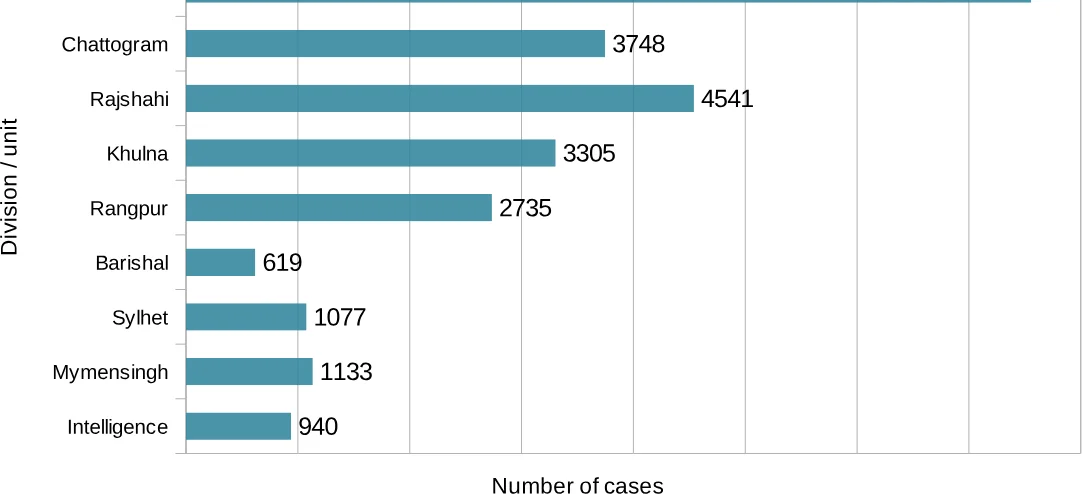
Dhaka had the highest burden (7,556 cases, 29.45%) while Barishal had the lowest (619 cases, 2.41%). Rajshahi and Chattogram had the next highest numbers of cases with 4,541 and 3,748 respectively. Dhaka, Rajshahi and Chattogram had a total of 15,845 cases, which made up 61.76% of all DNC cases nationally. An equal allocation of justice-related screening and referral capacity across divisions would not reflect this workload distribution. These figures refer to detected and processed cases, not prevalence, and concentration is used as an operational planning indicator, not a ranking of population risk.
5.2 Divergence Between Supply-Interdiction and Treatment-Demand Signals
The comparison investigates whether the selected seizure indicators move in sync with treatment-demand indicators, since the divergence provides an indication of the areas in which the outputs of supply control do not correspond to the pressure on the service. The first and third objectives are addressed in Figure 4 which compares changes reported from heroin, Yaba and crystal meth from 2021 to 2022.
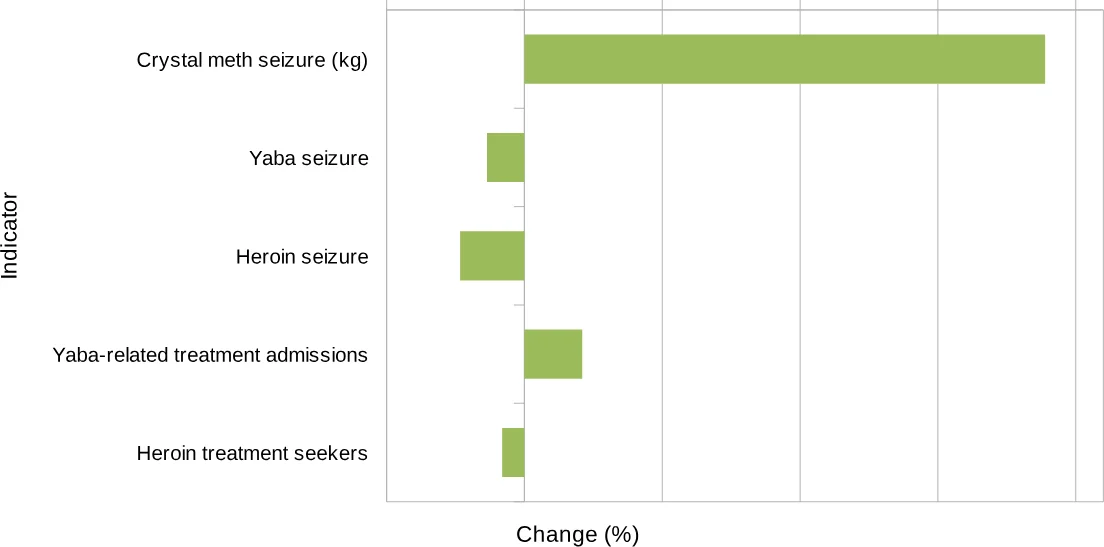
The volume of crystal-meth seizures increased from 36 kg to around 104 kg, representing a calculated growth of 188.9% – the largest increase among the selected indicators. The quantity of Yaba seized fell 13.58% and the number of treatment admissions related to Yaba rose 20.97%. Heroin had a decrease in seizures (23.33%) and treatment seekers (8.10%) and the sizes of the decreases were different. The key divergence is Yaba: lower seizure quantities alongside increased recorded treatment admissions. Decreasing seizures cannot be interpreted as a decreasing drug burden, and interdiction and treatment indicators should be monitored concurrently.
5.3 Youth Exposure and Modifiable Prevention Targets
Youth exposure and modifiable correlates are examined as prevention necessitates a specific risk mechanism. In order to examine the second objective, selected reported associations among 424 high-school adolescents are presented in Table 3 and compared to lifetime and current smoking, illicit drug use, and alcohol consumption in the same adolescents in Figure 5.
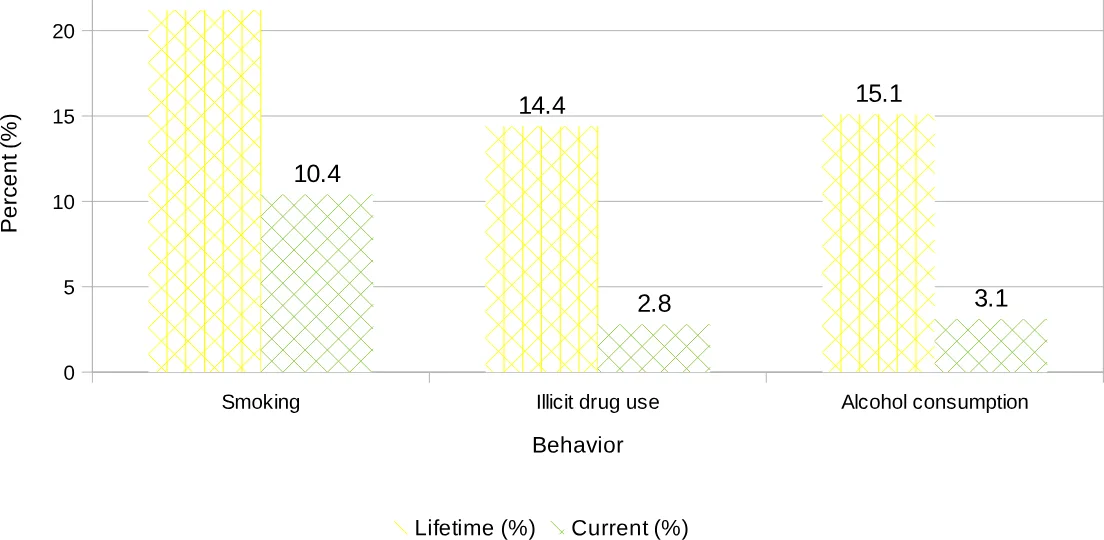
Current use was less than lifetime exposure for all behaviors. Current illicit drug use rates were lowest (2.8%) and smoking rates were highest (10.4%). The largest gap between lifetime and current prevalence was for alcohol use (12.0 percentage points), followed by illicit drug use (11.6 percentage points) and smoking (10.8 percentage points). These gaps identify respondents who reported previous substance use but no current use within the study’s measurement window. This subgroup may be relevant to prevention of resumed use, but the cross-sectional data do not establish dependence, recovery, or future relapse. Table 3 shows selected quantitative targeting-relevant associations from the same study.
Table 3. Selected reported associations with current substance use among high-school adolescents
| Factor | Reported odds ratio | 95% confidence interval | Analytical interpretation |
|---|---|---|---|
| Male sex | 51.178 | 6.989–374.772 | Very large but imprecise targeting marker; magnitude is unstable. |
| Personal smartphone ownership | 7.439 | 1.767–31.325 | Strong association relevant to digitally segmented prevention. |
| Fast-food consumption | 2.216 | 1.114–4.406 | Smaller lifestyle association suitable for multicomponent risk profiling. |
Note. Odds ratios and their 95% confidence intervals are dimensionless, not percentages. The reported associations do not establish causation.
The odds ratio for personal smartphone ownership was 7.439 and higher than the estimate of 2.216 for fast-food intake, whereas the estimate for male sex was extremely large and imprecise. The wide confidence interval indicates substantial uncertainty and may reflect sparse observations, so the magnitude of the sex association should not be treated as stable. The reported family-influence, smartphone-duration, and late-night-sleep associations also inform multicomponent prevention design.
5.4 Treatment-Service Demand and Delivery Capacity
Treatment demand and psychosocial service output are examined as there needs to be a responsive capacity to the substances and support needs that reach services. To address the third objective, the treatment counts for cannabis, codeine preparations, and injecting-drug use (IDU) are provided alongside selected counseling and psychosocial-education outputs in Table 4 for 2022.
Table 4. Selected 2022 Treatment-Demand and Psychosocial-Service Outputs
| 2022 indicator | Reported output | Interpretive use |
|---|---|---|
| Cannabis-related treatment patients | 8,459 | Largest listed treatment-demand count. |
| Codeine/Phensedyl treatment patients | 5,629 | Second-largest listed substance-specific count. |
| Injecting-drug treatment patients | 915 | Smaller group requiring specialized clinical capacity. |
| Counseling services: Dhaka Ahsania Mission | 1,440 | Psychosocial service activity. |
| Psychosocial-education sessions: Dhaka Ahsania Mission | 354 | Structured education activity; no coverage denominator reported. |
Among the listed indicators, the largest patient count was for cannabis (8,459), followed by codeine preparations (5,629) and injecting-drug use (915). These counts describe both larger-volume services and smaller groups with specialized clinical needs. Counseling contacts and psychosocial-education sessions represent different service units and are not directly comparable. These counts show service activity and not coverage, completion, post-discharge continuity, or relapse reduction. The central measurement gap is a missing denominator that connects the output of services to the need for treatment and sustained recovery.
5.5 Relapse Mechanisms and Reintegration Barriers
The analysis explores the processes of relapse and social outcomes as they are affected by the aftercare environment of rehabilitation. Four of the most common reasons for relapse are shown in Figure 6 and the most common substances reported across relapses in the national rehabilitation sample are summarized in Table 5.
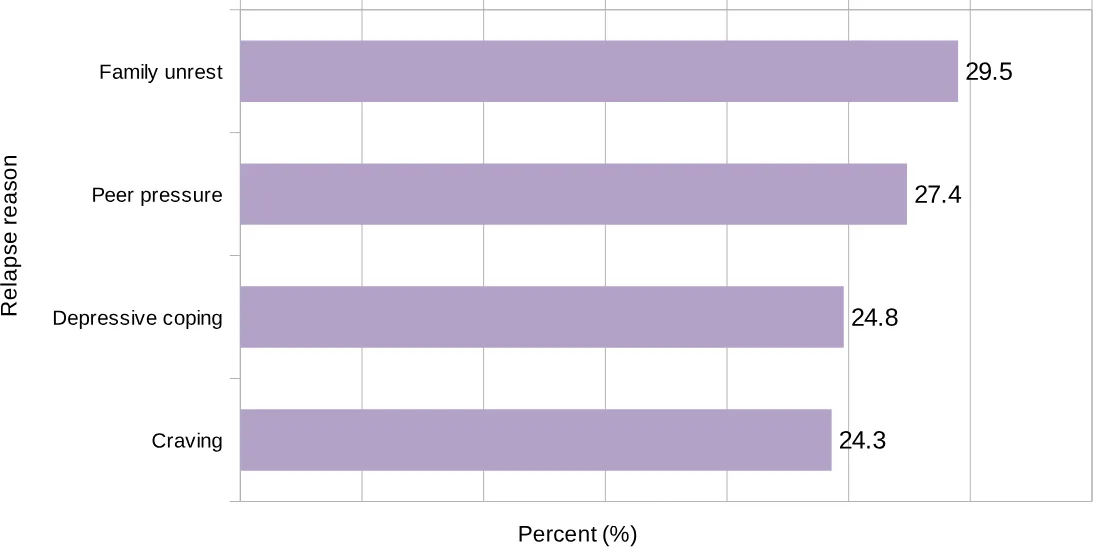
Peer pressure (27.4%), family unrest (29.5%), depressive coping (24.8%) and craving (24.3%) were the most commonly reported reasons for relapse. The 5.2-percentage-point range is narrow, suggesting a multidimensional pattern of relapse involving social and affective processes alongside craving. The pattern of substance use is displayed in Table 5, in the same rehabilitation context.
Table 5. Substance-Use Pattern Reported Among Relapse Cases
| Substance reported among relapse cases | n | Percent of relapse sample (%) |
|---|---|---|
| Amphetamine | 693 | 76.1 |
| Cannabis | 683 | 75.0 |
| Alcohol | 495 | 54.3 |
Note. Percentages use the reported relapse sample (n = 911). Substance-specific percentages are not mutually exclusive categories and should not be summed.
There was substantial polysubstance exposure with 76.1% reporting amphetamine use, 75.0% cannabis and 54.3% alcohol in the relapse cases. To consider reintegration circumstances, Figure 7 presents reported legal and social consequences in the rehabilitation sample, addressing the reintegration component of the third objective. These aggregate indicators do not provide sex-specific estimates.
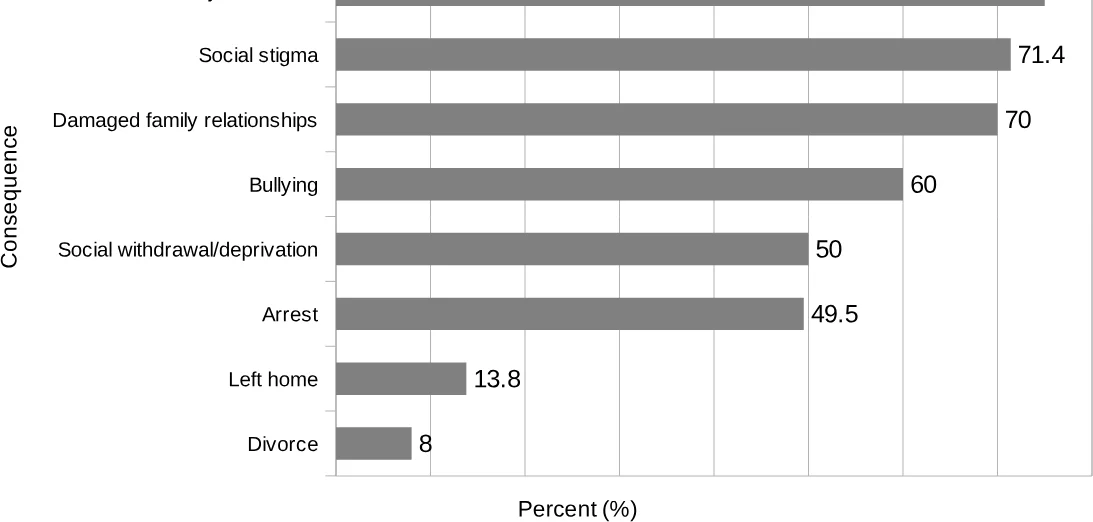
Approximately three-quarters (75%) reported poor family interaction, 71.4% suffered from stigma, 70% suffered from damaged family relationships, 60% suffered from bullying, 50% suffered from social withdrawal or deprivation and 49.5% reported an arrest history. Leaving home and divorce were less common. The overwhelming pressures are relational and social and reintegration failure cannot be captured through relapse or rearrest alone.
5.6 Cross-Pillar Integration Diagnostic
Operational handoffs between justice, awareness, treatment and reintegration address the fourth objective. The diagnostic matrix (Table 6) pairs each observed pressure with a missing transition and measurable response.
Table 6. Cross-Pillar Integration Diagnostic and Measurable Response Matrix
| Observed pressure | Missing transition | Proposed integration response | Proposed performance metric |
|---|---|---|---|
| High case concentration in Dhaka, Rajshahi, and Chattogram | Justice contact → clinical screening/referral | Pilot standardized triage and referral protocols in highest-workload divisions. | Eligible contacts screened; referral completion rate. |
| Crystal-meth escalation and Yaba seizure–treatment divergence | Market intelligence → prevention / treatment readiness | Joint monthly signal review linking interdiction, messaging, and service readiness. | Time from signal detection to revised prevention/service action. |
| Specific youth family, digital, and lifestyle risk markers | Awareness exposure → behavior/help-seeking | Segment school, family, peer, and digital prevention by observed risk mechanism. | Target-group reach plus help-seeking/referral uptake. |
| Treatment activity alongside family, peer, depressive, and craving relapse drivers | Treatment discharge → structured aftercare | Standard discharge plan with family intervention and scheduled follow-up. | 30- and 90-day aftercare engagement. |
| Stigma, family damage, bullying, withdrawal, and arrest | Rehabilitation/release → social reintegration | Link family mediation, education/employment support, anti-stigma activity, and justice follow-up. | Family engagement, education/employment status, and repeat justice contact. |
Four gaps dominate. There are no proportional screening and referral measures in the geographic case concentration. The feedback loop to rapid prevention content in the emerging market signal is lacking, and there is a gap in feedback in the seizure treatment process. Youth risk markers are more specific than the present awareness-output measures and thus behavioral targeting remains unverified. Despite high family, peer, depression, craving, stigma and exclusion signals, treatment activity does not have a standardized continuity denominator. The available evidence thus indicates a transition-measurement deficit, meaning that there is activity in all pillars but indicators for measuring transition from arrest to assessment, awareness to help-seeking, treatment to aftercare, and release to reintegration are weak. As a result, the IPDR framework focuses on linkage metrics over additional stand-alone activity counts. The proposed framework therefore specifies named institutional transitions, defined timeframes, and outcome reporting. Missing indicators do not, by themselves, demonstrate that services or institutional linkages are absent. These discontinuities could be seen on a shared dashboard without any distortion in meaning of the denominator, since distinct measures would not be combined into an overall score.
6. Discussion
The findings identify gaps in reported coordination between drug-prevention sectors in Bangladesh, rather than an absence of activity in every sector. Drug-related risks span different environments, while the available indicators do not trace individual transitions between sectors. The IPDR framework can elucidate this trend, which views enforcement, prevention, treatment and reintegration as complementary processes with different roles. Without a handoff between these processes, the pathway is not completed.
Criminal-justice findings are significant because they relate to the concentration of enforcement and changes in seizures which are operationally observable, while the linkage into treatment following justice contact is far less observable. International diversion research identifies clear rules for eligibility, accessibility of services, and interagency collaboration as important factors for success [11]. A high-volume division is consistent with that mechanism, but has an even more subtle measurement issue: a high-volume division requires not just enforcement capacity, but proportional assessment and referral capacity as well. The Yaba divergence is yet another example of the need to interpret supply indicators and health-service indicators separately. A decrease in the number of tablets seized and an increase in treatment admissions indicate different processes and should not be used to infer that there is any overall improvement in one indicator.
The prevention findings also indicate the need to shift from general to specific behavioral prevention interventions. The focus of school-based prevention research is on the educational, parental, peer, policy, environmental, and counseling elements [9]. Bangladeshi risk patterns also align with the multilevel structure: modifiable correlates go beyond knowledge and extend to family influences, digital habits, sleep experiences and social and broader psychosocial circumstances. The policy implication is that it's not just more messaging. It is audience segmentation and behavioral goal setting and referral pathways for adolescents who have already been exposed to substances. Communication activity without behavioral measurement may be very visible without demonstrating preventive value.
This is reinforced by the rehabilitation findings. Each mechanism of relapse is spread over the four domains of family conflict, peer pressure, affect regulation and craving, and legal and social consequences demonstrate that the world outside of treatment is frequently destabilizing. This is in line with the literature on treatment access that shows family support, stigma, perceived need and service continuity to be important drivers of engagement [13]. It also reflects stigma research that indicates that exclusion has a negative impact on treatment processes and recovery-related outcomes [19]. The implications for practice are that completion of residential treatment is an intermediate step, rather than the completion of prevention. The family needs to be involved in discharge planning, the peers' network needs to be managed, a mental-health assessment should be conducted, education or livelihood linkage and scheduled follow-up should be provided.
Another implication is related to treatment architecture. Service design is important, as well as beds, since there exist programs with high psychosocial integration and social cohesion features that have high retention, even in resource-limited environments [21]. The outputs available in Bangladesh are related to admissions and psychosocial activities, with limited information available about retention, completion, post-discharge contact and sustained recovery. Thus, the use of indicators of transition would add a level of accountability to the policy without necessitating a composite score. Examples of these are the proportion of people who are referred after completion of screening, proportion referred within a specified timeframe, proportion who begin treatment after referral, i.e. after screening, the proportion who had an aftercare contact within 30 days of discharge and the proportion who engaged with further contacts at follow-up.
In methodological terms, it is shown how the study of the convergence with denominator preservation is useful. The various administrative cases, seizures, treatment admissions, prevalence in adolescents, reasons for relapse, and social consequences represent different populations and processes. Their integration is analytically informative only when these differences are preserved rather than numerically pooled. This method does not lead to false precision, but does show mismatches at the system level. This leads to a system of governance around well-documented transitions: trafficking control supports market intelligence into prevention; justice triage supports eligible users entering into treatment; and prevention supports at-risk individuals entering into early support; rehabilitation supports discharged users into aftercare; and all pillars support compatible indicators through a joint monitoring process. This approach incorporates parallel institutional activities into a connected prevention pathway. This focus also distinguishes between policy intensity and policy coherence, such that an increase in one policy isn't considered to make up for a lack of another.
6.1 Gender-Responsive Interventions
The treatment counts in Table 4 and the legal and social indicators in Figure 7 are not disaggregated by sex. They therefore cannot establish women’s share of admissions or quantify gender-specific barriers to referral, retention, or reintegration. Within the proposed IPDR framework, gender-responsive assessment would examine stigma, family support, service affordability, and access to referral and aftercare. Reporting screening, referral completion, treatment initiation, retention, and aftercare engagement separately by sex would make these questions testable. These are proposed assessment domains, not demonstrated intervention effects or explanations for a measured female admission rate.
7. Conclusion
The lack of linkage between criminal-justice activity, targeted prevention, rehabilitation and social reintegration is a challenge to drug prevention in Bangladesh. The objective of this study was to develop an integrated policy framework, which incorporates the statistics of drug control occurrences at various administrative levels with verified aggregate results of drug use and addiction research conducted with Bangladeshi youths and across the country. The preservation of original denominators, comparison of justice and treatment signals, identification of modifiable prevention targets and mapping of relapse and reintegration mechanisms onto the IPDR framework for policy diagnosis and design of transitions were all parts of a convergent secondary-data policy diagnostic.
The analysis revealed concentrated justice workload, a sharp crystal-meth interdiction signal, a lack of congruency between declining Yaba seizures and increased Yaba treatment admissions, discernible youth risk environments, and reported relapse reasons involving family, peer, affective, and craving-related processes. Social stigma, damaged family relationships, bullying, and arrest history further demonstrated that recovery takes place in a challenging reintegration setting. The proposed response is a transition-focused prevention architecture connecting supply intelligence, a differentiated justice triage system, targeted awareness, treatment referral, family and psychosocial rehabilitation, and structured aftercare, accompanied by shared performance indicators.
Secondary aggregate data, heterogeneous populations, varying measurement windows and lack of national measures of treatment continuity and awareness impact account for some limitations. Further research is needed to link justice-to-treatment and rehabilitation-to-aftercare pathways prospectively, to measure effectiveness of prevention, to follow up patients from treatment to outcomes, and to evaluate their implementation at the national level. The cost, equity, gender and geographic reach also must be explicitly assessed prior to national scale-up of the proposed pathway. There is also a need to have clear definitions in place for screening eligibility, referral completion, aftercare engagement, relapse, and reintegration outcomes for national implementation.
8. Recommendations
Bangladesh requires a coordinated prevention package organized around measurable transitions.
8.1 Harm Reduction
School and community prevention programs need segmented content addressing family communication, peer influence, digital routines, sleep, mental-health distress, and early substance exposure, accompanied by behavioral follow-up rather than event counts alone. Rapid market signals involving Yaba, crystal meth, and other emerging drugs need formal feedback into prevention messages and treatment preparedness.
8.2 Legal Reform
DNC and police units in high-burden divisions need standardized screening and referral protocols that distinguish trafficking from use-related clinical need, with referral completion tracked separately from arrests.
8.3 Rehabilitation Infrastructure
Treatment policy requires routine discharge planning, family sessions, mental-health assessment, peer-risk planning, and scheduled aftercare contacts, with continuity indicators reported by rehabilitation centers. Reintegration services need education, livelihood, stigma-reduction, and family-repair components. A national cross-sector dashboard needs separate measures for market pressure, justice triage, prevention reach, help-seeking, treatment initiation, retention, relapse, and reintegration. Pilot implementation in Dhaka, Rajshahi, and Chattogram offers a practical first phase because these divisions account for most DNC case workload. Independent evaluation needs predefined implementation, equity, and outcome indicators before expansion beyond pilot divisions.
Author Contributions
Conceptualization; methodology; data curation; formal analysis; visualization; writing—original draft; writing—review and editing.
Conflict of Interest
No conflict of interest was disclosed in the materials supplied for manuscript preparation.
Declaration of Generative AI in the Writing Process
ChatGPT was used to assist with language correction, proofreading, and targeted organization of this manuscript. The authors retain responsibility for reviewing the assisted revisions and for the accuracy and integrity of the final manuscript.
References
- [1] F. Al-Mamun, C.-Y. Lin, M. M. ALmerab, D. Gozal, and M. A. Mamun, “Past-year substance use behaviors among university admission test-takers: insights from Bangladesh,” BMC Public Health, vol. 24, art. 2769, 2024. DOI: 10.1186/s12889-024-20240-2
- [2] M. S. Moonajilin et al., “Substance use behavior and its lifestyle-related risk factors in Bangladeshi high school-going adolescents: An exploratory study,” PLOS ONE, vol. 16, no. 7, e0254926, 2021. DOI: 10.1371/journal.pone.0254926
- [3] M. M. A. Khan, M. M. Rahman, S. S. Jesmin, M. G. Mustagir, M. R. Haque, and M. S. Kaikobad, “Psychosocial and socio-environmental factors associated with adolescents’ tobacco and other substance use in Bangladesh,” PLOS ONE, vol. 15, no. 11, e0242872, 2020. DOI: 10.1371/journal.pone.0242872
- [4] S. I. Khan et al., “Understanding the reasons for using methamphetamine by sexual minority people in Dhaka, Bangladesh,” International Journal of Drug Policy, vol. 73, pp. 64–71, 2019. DOI: 10.1016/j.drugpo.2019.07.009
- [5] S. I. Khan et al., “The Effects of Methamphetamine Use on the Sexual Lives of Gender and Sexually Diverse People in Dhaka, Bangladesh: A Qualitative Study,” Archives of Sexual Behavior, vol. 50, no. 2, pp. 479–493, 2021. DOI: 10.1007/s10508-020-01674-2
- [6] M. H. Nabi et al., “Reasons of relapse and pattern of drug use among the substance users in Bangladesh: A nationwide study,” Journal of Ethnicity in Substance Abuse, vol. 21, no. 3, pp. 876–885, 2022. DOI: 10.1080/15332640.2020.1801549
- [7] M. D. H. Hawlader, M. H. Nabi, A. Hussain, S. U. Al Amin, S. Zaman, and I. Masud, “Legal and social consequences of substance use: Results from a nationwide study in Bangladesh,” Journal of Ethnicity in Substance Abuse, vol. 21, no. 4, pp. 1327–1337, 2022. DOI: 10.1080/15332640.2020.1846008
- [8] S. Rashid, “Impact of COVID-19 on Selected Criminal Activities in Dhaka, Bangladesh,” Asian Journal of Criminology, vol. 16, pp. 5–17, 2021. DOI: 10.1007/s11417-020-09341-0
- [9] H. Heikkilä, W. Maalouf, and G. Campello, “The United Nations Office on Drugs and Crime’s Efforts to Strengthen a Culture of Prevention in Low- and Middle-Income Countries,” Prevention Science, vol. 22, pp. 18–28, 2021. DOI: 10.1007/s11121-020-01088-5
- [10] A. Cadri, A. N. Beema, T. Schuster, T. Barnett, E. Asampong, and A. M. Adams, “School-based interventions targeting substance use among young people in low-and-middle-income countries: A scoping review,” Addiction, vol. 119, no. 12, pp. 2048–2075, 2024. DOI: 10.1111/add.16623
- [11] E. Blais, J. Brisson, F. Gagnon, and S.-A. Lemay, “Diverting people who use drugs from the criminal justice system: A systematic review of police-based diversion measures,” International Journal of Drug Policy, vol. 105, art. 103697, 2022. DOI: 10.1016/j.drugpo.2022.103697
- [12] C. Macdonald et al., “Interventions to reduce harms related to drug use among people who experience incarceration: systematic review and meta-analysis,” The Lancet Public Health, vol. 9, no. 9, pp. e684–e699, 2024. DOI: 10.1016/S2468-2667(24)00160-9
- [13] S. Sarkar, A. Tom, and P. Mandal, “Barriers and Facilitators to Substance Use Disorder Treatment in Low-and Middle-Income Countries: A Qualitative Review Synthesis,” Substance Use & Misuse, vol. 56, no. 7, pp. 1062–1073, 2021. DOI: 10.1080/10826084.2021.1908359
- [14] J. M. Heijdra Suasnabar and B. Hipple Walters, “Community-based psychosocial substance use disorder interventions in low-and-middle-income countries: a narrative literature review,” International Journal of Mental Health Systems, vol. 14, art. 74, 2020. DOI: 10.1186/s13033-020-00405-3
- [15] A. A. Hassan, A. M. Ibrahim, and A. Nadkarni, “A systematic review of task-sharing interventions for substance use and substance use disorder in low- and middle-income countries,” Drug and Alcohol Dependence, vol. 256, art. 111093, 2024. DOI: 10.1016/j.drugalcdep.2024.111093
- [16] C. T. Orjiakor et al., “A systematic review of actors, actions, and outcomes of community-based efforts to prevent or reduce methamphetamine use,” Addiction Research & Theory, vol. 31, no. 5, pp. 335–344, 2023. DOI: 10.1080/16066359.2023.2167982
- [17] R. C. Lefebvre et al., “Health communication campaigns to drive demand for evidence-based practices and reduce stigma in the HEALing communities study,” Drug and Alcohol Dependence, vol. 217, art. 108338, 2020. DOI: 10.1016/j.drugalcdep.2020.108338
- [18] B. Young et al., “Effectiveness of Mass Media Campaigns to Reduce Alcohol Consumption and Harm: A Systematic Review,” Alcohol and Alcoholism, vol. 53, no. 3, pp. 302–316, 2018. DOI: 10.1093/alcalc/agx094
- [19] V. A. Earnshaw, “Stigma and substance use disorders: A clinical, research, and advocacy agenda,” American Psychologist, vol. 75, no. 9, pp. 1300–1311, 2020. DOI: 10.1037/amp0000744
- [20] M. M. Kalmin et al., “A Systematic Review of the Efficacy of Contingency Management for Substance Use Disorders in Low and Middle Income Countries,” International Journal of Behavioral Medicine, vol. 31, no. 4, pp. 605–619, 2024. DOI: 10.1007/s12529-023-10197-8
- [21] M. Marks, A. Scheibe, and S. Shelly, “High retention in an opioid agonist therapy project in Durban, South Africa: the role of best practice and social cohesion,” Harm Reduction Journal, vol. 17, art. 25, 2020. DOI: 10.1186/s12954-020-00368-1
CITE THIS ARTICLE
Rahman, M. B. (2024). Drug Prevention in Bangladesh: Integrating Criminal Justice, Public Awareness, and Rehabilitation into an Evidence-Based Policy Framework. https://www.bazlurrahman.com/article/973e8cd6-193d-4738-9c38-52530cd559a1
M. B. Rahman, “Drug Prevention in Bangladesh: Integrating Criminal Justice, Public Awareness, and Rehabilitation into an Evidence-Based Policy Framework,” 2024. [Online]. Available: https://www.bazlurrahman.com/article/973e8cd6-193d-4738-9c38-52530cd559a1
Rahman, M. B. (2024) ‘Drug Prevention in Bangladesh: Integrating Criminal Justice, Public Awareness, and Rehabilitation into an Evidence-Based Policy Framework’. Available at: https://www.bazlurrahman.com/article/973e8cd6-193d-4738-9c38-52530cd559a1
Rahman, Md. Bazlur. “Drug Prevention in Bangladesh: Integrating Criminal Justice, Public Awareness, and Rehabilitation into an Evidence-Based Policy Framework.” 2024, https://www.bazlurrahman.com/article/973e8cd6-193d-4738-9c38-52530cd559a1.
Md. Bazlur Rahman. “Drug Prevention in Bangladesh: Integrating Criminal Justice, Public Awareness, and Rehabilitation into an Evidence-Based Policy Framework.” (2024). https://www.bazlurrahman.com/article/973e8cd6-193d-4738-9c38-52530cd559a1.
Rahman MB. Drug Prevention in Bangladesh: Integrating Criminal Justice, Public Awareness, and Rehabilitation into an Evidence-Based Policy Framework. 2024. https://www.bazlurrahman.com/article/973e8cd6-193d-4738-9c38-52530cd559a1
@misc{article_973e8cd6193d47389c3852530cd559a1,
  title = {Drug Prevention in Bangladesh: Integrating Criminal Justice, Public Awareness, and Rehabilitation into an Evidence-Based Policy Framework},
  author = {Md. Bazlur Rahman},
  year = {2024},
  url = {https://www.bazlurrahman.com/article/973e8cd6-193d-4738-9c38-52530cd559a1},
}
TY - GEN AU - Md. Bazlur Rahman TI - Drug Prevention in Bangladesh: Integrating Criminal Justice, Public Awareness, and Rehabilitation into an Evidence-Based Policy Framework PY - 2024 UR - https://www.bazlurrahman.com/article/973e8cd6-193d-4738-9c38-52530cd559a1 ER -