Adolescent substance use poses a risk to health, learning, and development in Bangladesh, but teachers' preventive and early-response roles are not well defined. This study converted student risk patterns into a school-based drug demand-reduction model with a teacher focus. A secondary analysis used a reproducible, proportionate gender-by-academic-group stratified sample of 320 complete Grade XI records from three schools. The following methods were used: prevalence estimation, comparison of subgroups, multivariable logistic regression, and repeated nested cross-validation. 10.6% of students were current users of any substance and 26.9% were lifetime users of any substance. The adjusted association was most evident for nonscience study. The six-signal model had modest discrimination (AUC 0.687), a Brier score of 0.090, and a negative predictive value of 94.7%, supporting its use as a low-risk rule-out aid rather than a diagnostic instrument. The pathway is proposed to be teacher-led universal prevention, confidential observation, supportive conversation, and safeguarded referral. Evaluation must monitor workload, confidentiality, false positives, equity, and harms. National validation, equity assessment, and implementation trials remain necessary before school-wide adoption.
Research ArticleSubstance Use PreventionIn progress
Teacher-Led Drug Demand Reduction in Bangladesh: Predictive Modelling and the TEPER Implementation Framework
Correspondence: mdbazlurrahman186@gmail.com
Abstract
Keywords adolescent substance useBangladeshdrug demand reductionearly interventionschool preventionteachers
1. Introduction
Drug demand reduction includes prevention of initiation, delayed initiation, interruption of escalating drug use, and timely connection to support. Adolescence is a critical time of life, as social identity, peer affiliation, autonomy, and daily routines shift rapidly, and life patterns of tobacco, alcohol, and other drug use start to solidify. Schools provide extended access to youth before the development of harmful use, even for students who do not often access clinical services. Despite this, reviews from low- and middle-income countries report on the uneven coverage of programmes, the diversity of programmes' content, and the lack of implementation reporting (Cadri et al., 2024). South Asian interventions are particularly under-researched, and there is little attention paid to local delivery systems and few rigorous trials (Hanif et al., 2025).
Bangladesh is an emergency for this agenda. There is increasing policy interest in school-based tobacco-initiation prevention (Hossain, Beard, et al., 2025), and a large amount of lifetime and current exposure to tobacco, alcohol and illicit drugs was reported by an open survey of Grade XI students in Savar (Moonajilin et al., 2021). Wider Bangladeshi studies have associated adolescent drug use with psychosocial and socio-environmental factors (Khan et al., 2020). These patterns shift the focus on drug demand reduction from a disciplinary issue to an educational, public health and protection issue. Consequently, the core policy question shifts from whether schools should engage in substance-use prevention to how they can do so effectively and safely.
Interactive, skills-based school programmes are more effective than information-only programmes, with varying effects depending on the substance, the quality of the programme and the length of follow-up (Hossain, Tattan-Birch, et al., 2025). Coaching, leadership endorsement, protected time and feedback are all necessary for the intensity of the curriculum materials to be realized, and they work together with teacher implementation (Layland et al., 2022). Tobacco is also a major focus of south-east Asian studies, with little attention given to combined use and early-response pathways (Bantwal et al., 2025). Staffing, perceived ownership, coordination, and programme fit are also shown to influence delivery in institutional readiness research (Árva et al., 2024). A Nepalese cluster-trial protocol is an example of a regional shift towards life skills, attitudes, and peer-pressure mechanisms, but transfer to Bangladesh will need to be contextualized (Shrestha et al., 2024).
Teachers are a unique part of this implementation system. Daily contact allows for the observation of sudden changes in attendance, loss of engagement, fatigue due to sleep, changes in peer relationships, and loss of routine self-care. Trusting classroom climates and teacher self-efficacy are also associated with students’ mental health and substance-related experiences (Bailey et al., 2024). The results of the surveys in Bangladesh show that there is a co-occurrence between addictive behaviour and mental-health issues (Hossain et al., 2024) and bullying victimisation in South Asia is linked to negative health behaviours (Rahman et al., 2020). The intersections reinforce the need for early supportive conversation and protecting referral. They also caution against using any one behavior, demographic group or academic stream as evidence of drug use.
Teacher centrality is also a consequence of the institutional nature of demand reduction. A visiting programme visits students on a sporadic basis, while teaching staff monitor participation, peer relationships, punctuality and changes in functioning over a period of months. This continuity helps to identify early, reinforce skills and follow through after referral. It also establishes a power imbalance: grades, discipline, confidentiality and parental contact are all in the same relationship. The effective model must therefore distinguish between pastoral inquiry and investigation, limit the amount of detail recorded, limit access to information and prevent academic penalty. Tobacco, alcohol, prescription misuse and illicit drugs must also be discussed in an age-appropriate manner, and not in a fear-based way, when discussing prevention content. Teachers require rehearsal, coaching and consultation, and school leaders require responsibility for adverse event review, service agreements and privacy. Therefore, strengthening teacher knowledge alone is insufficient; implementation conditions must be evaluated alongside student outcomes.
The previous Bangladeshi studies have three significant drawbacks. First, most studies estimate prevalence or associations, but do not indicate how observable indicators relate to teacher action. Second, cross-sectional models tend to focus on statistical significance rather than out-of-sample discrimination, calibration, and operational thresholds. Third, the implementation of school surveillance carries with it the risk of gender profiling, disclosure, punishment, and false accusation, but the risks of safeguarding implementation are not given much analytical attention. The feasibility study conducted in Bangladesh, India and Pakistan shows that school-based data collection is feasible (Mishu et al., 2024), while accounts from other countries show confusion regarding the roles of prevention, identification, counselling and referral (Nordmyr & Forsman, 2021). There is no study that has combined local patterns of participation, predictive validation and the bounded role of the teacher in one demand-reduction framework in Bangladesh.
Thus, the purpose of this study was to adapt an authentic Bangladeshi student data set into an ethically framed, teacher-driven school prevention and early intervention model. The study aimed at achieving three goals:
To explain substance, use patterns throughout the life course and among current students.
To find school-visible predictors and assess the performance of the models.
To create an ethical, tiered teacher-led prevention and referral process.
The contribution is an implementation-oriented bridge from epidemiological patterning to confidential classroom observation, brief supportive engagement, and accountable referral. It places teachers as preventive, relational gatekeepers, not diagnosticians, and puts privacy, proportionality, safeguarding and professional escalation into the fabric of everyday school life. This integration brings together statistical analysis and a pathway to reduce demand that is appropriate for resource-limited educational environments.
2. Literature Review
2.1 Prevention effectiveness and programme architecture
The mechanisms of school prevention are linked and include: changing normative beliefs, enhancing refusal and decision-making skills, enhancing emotional regulation, enhancing help-seeking, and reducing environmental access. Multicomponent and participatory interventions tend to be more effective than one-way risk communication, with effect estimates depending on the definition of the outcome and follow-up, across low-resource settings (Cadri et al., 2024). There are limited controlled evaluations and significant heterogeneity in substance, age, and intensity of delivery identified in the South Asian synthesis (Hanif et al., 2025). Long-term trial results show that universal and selective programmes have different trajectories, and favour a layered architecture over a single classroom package (Newton et al., 2022). While digital school interventions have the potential to reach more students and to standardise the core content, engagement and implementation context are still key (Champion et al., 2019). A large Latin American trial also suggests that culturally adapted, skills-based curricula need to be tested locally, rather than imported (Sanchez et al., 2021). The problem is not so much the availability of promising curricula as the development of a dependable school system based on them.
2.2 Teachers as implementers and relational gatekeepers
Teachers have an impact on prevention both in terms of how they teach and how they get to students. If there is a combination of structured school and teacher support, then the behavioural change is greater than if there is only one type of support (Layland et al., 2022). Early-identification training enhances knowledge, referral decision-making, and confidence, but benefits are contingent on ongoing consultation and thresholds (von der Embse et al., 2018). Research on teacher preparation has suggested that students who are directly or indirectly impacted by drug use are not always considered in teacher preparation (Nicholson, 2025). Educator accounts indicate that behavioral observation is helpful, but also report uncertainty, workload, and fear of misclassification (Ezomo & Prinsloo, 2025). The results of these findings are consistent in that teachers need clear roles, brief scripts, referral maps, and safeguards against taking on clinical roles. They have conflicting views on who should provide prevention: teachers or outside experts. The more powerful synthesis puts the teachers in charge of teaching and the first line of observation, while qualified services take care of assessment and treatment.
2.3 Implementation fidelity, adaptation, and school capacity
How a programme is implemented is an active determinant of programme effect. Reviews identify leadership endorsement, timetable space, staff motivation, training, intervention fit, and pupil responsiveness as recurrent facilitators (Waller et al., 2017). Nationwide institutional analysis likewise links programme reach with school characteristics, coordination, and perceived feasibility. Fidelity is impacted by classroom conditions in scale-up (Combs et al., 2022) and delivery studies indicate that even manualised programmes are not delivered in the same way by different teachers and in different grades (Beamon et al., 2023). In Brazil, mixed-methods evaluation revealed no simple fidelity–outcome relationship and infrastructure and cultural adaptation (Gusmoes et al., 2022). This apparent paradox is due to the differences in measurement: session completion is a poor indicator of quality of interaction, responsiveness, and appropriate adaptation. Prevention systems must be faithful to the mechanisms, and have examples, language, pacing, and referral arrangements that are documented.
2.4 Risk visibility, early intervention and safeguarding
The ability to make a distinction between observation of concern and diagnosis is essential to early intervention. Environmental mapping around South Asian schools reveals ongoing availability of tobacco and alcohol products in the vicinity of schools, despite zoning regulations (Athauda et al., 2025), and trend analysis suggests that the timing of initiation is still a policy concern (Singh et al., 2023). The findings of mental-health and suicidality studies in Bangladesh support the need for integrated safeguarding instead of drug messaging (Al-Mamun et al., 2025). The most salient indicators that are visible in the school, such as attendance change, fatigue, device use, disruption of routines, academic disengagement, peer conflict, and deterioration of self-care, are nonspecific. The value of their use lies in encouraging private inquiry, rather than in confirming substance use, if several changes are added up. Low base rates lead to low positive predictive value, and indiscriminate screening leads to false positives. Confidential, consent-aware conversation and referral are therefore central analytic requirements, not optional ethical additions.
2.5 Contextual transfer and the unfilled Bangladesh gap
The intervention literature shows some positive results and low transferability. A neuroscience-informed programme for older adolescents is feasible in schools (Debenham et al., 2022), and a Mexican adaptation of a resistance-skills curriculum has been shown to be important to tailor the content to the cultural and developmental context (Kulis et al., 2025). Implementation infrastructure, such as a national web portal to increase access to prevention resources for school staff and parents, was also demonstrated to be valuable beyond classroom lessons (Stapinski et al., 2022). However, there is no validated model that links local observable risk patterns to teacher decision-making, family involvement, safeguarding and specialist referral in Bangladesh. Few existing studies report calibration or threshold trade-offs or distributional impacts of triage. It also leaves responsibility boundaries ambiguous. The resulting gap is an epidemiological, predictive, implementation, and ethical gap.
For Bangladesh, international evidence should therefore be treated as a design input rather than a ready-made school programme. Translation into practice requires alignment with the national curriculum and NCTB-approved learning content, teacher workload, safeguarding procedures, and locally available referral services. The present secondary analysis did not formally audit NCTB curriculum materials or institutional readiness; these should be assessed during pilot implementation before TEPER is scaled.
The three methodological weaknesses that were identified were common to all the strands reviewed. Outcomes are often based on self-report with no other measures of help-seeking, attendance, educational exclusion or referral completion. Implementation studies tend to report on programme dose and exclude issues of staff competence, relational quality, confidentiality breaches and unintended harm. Lastly, subgroup analyses provide average differences but do not evaluate if decision rules differ by gender, school type or pathway. In Bangladesh, stigma and limited counselling capacity increase the cost of false-positive identification, which is significant in this context. A useful study should therefore report association and prediction, differentiate discrimination from calibration, and link all thresholds to a proportionate action. It should also make local validation, fairness monitoring and student voice requirements for implementation. This new standard expands on the current focus on negative predictive value, tier size, role boundaries and referral governance, not a single focus on statistically significant risk factors.
Teacher reach, continuity, and trusted contact are the most consistent assets across the five strands. While interactive skills and layered prevention consistently show more promise than information-only delivery, heterogeneous outcomes, limited follow-up, and limited trials in South Asia limit transfer. Teacher training enhances preparedness, but the boundaries of the roles are not clear, and the gains are lessened when not coached. Delivery is affected by leadership, timetable space, intervention fit, and pupil responsiveness, but session counts do not take into account relational quality and appropriate adaptation. Behavioural change is a cumulative process, and it is reasonable to ask questions if the behaviour has changed; however, if the behaviour is not specific, and the prevalence is low, then there is a significant risk of false positives. The findings specific to Bangladesh set the stage for action, but do not provide national prevalence estimates or causal teacher effects. These intersections and conflicts help to inform a model of universal prevention and bounded observation, confidential conversation, proportionate referral, and monitored contextual adaptation. They also set out the rationale for the need for a high rule-out value for predictive translation and the need for a risk review rather than an accusation when the risk is raised.
3. Conceptual Framework
3.1 Theoretical assumptions and teacher functions
The proposed Teacher-Enabled Prevention and Early Response (TEPER) framework is a combination of social-ecological prevention and implementation and tiered-response logic. The first assumption is that adolescent substance use is a product of complex, interactive personal routines, peer and family environments, school climate, and environmental availability, with no single indicator being able to identify use. The second assumption is that teachers influence proximal mechanisms (knowledge, norms, skills, belonging, observation, help-seeking) and specialist services have the authority to diagnose and treat. Joint teacher and school support is thus a prerequisite for implementation (Hossain et al., 2024), and the programme components are only implemented as intended when there is a suitable organisational context (Waller et al., 2017). Figure 1 illustrates the relational dynamics of TEPER, linking student and school context with four mutually reinforcing teacher functions, implementation conditions, contextual influences, and demand-reduction outcomes.
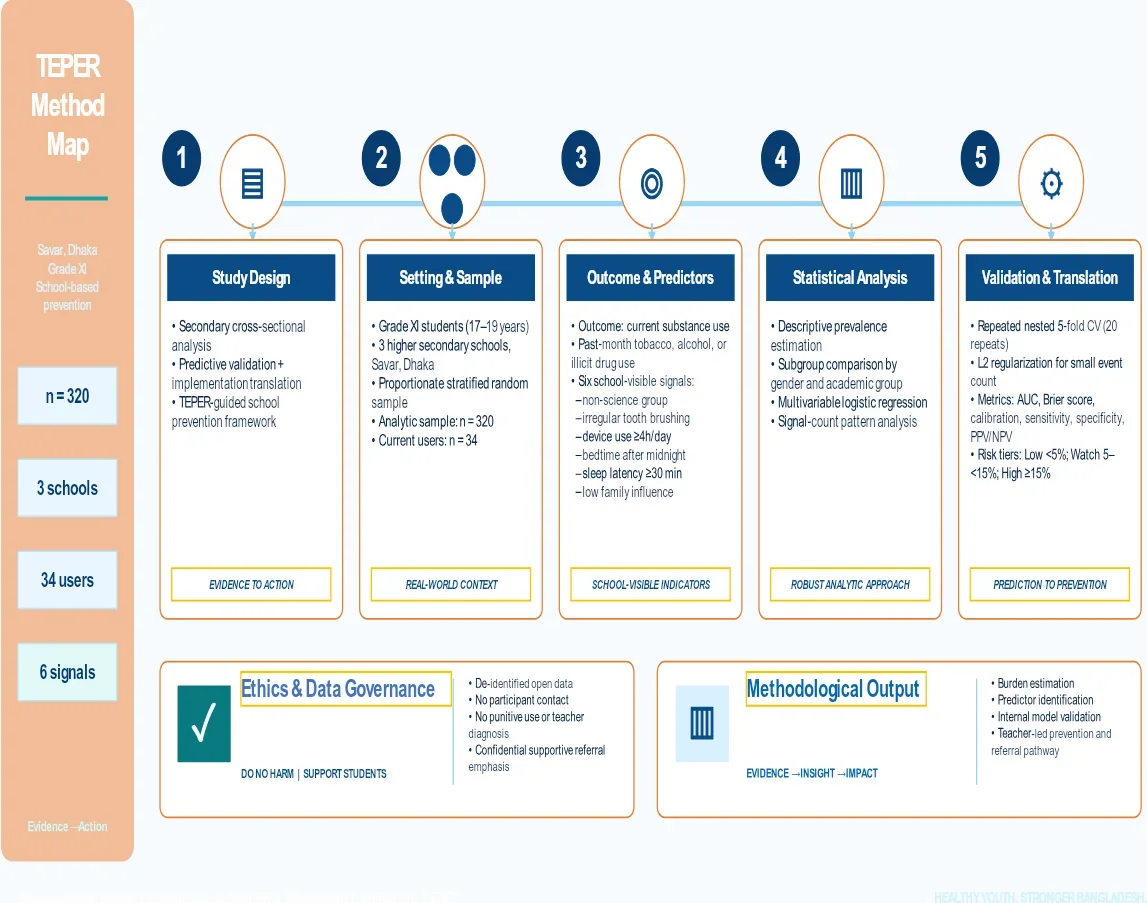
Figure 1 places the role of the teacher in drug demand reduction in four areas: universal prevention, early recognition, supportive response, and safeguarded referral. Universal provision increases drug literacy and coping skills and helps to establish drug help-seeking routes. Teachers monitor changes in routines and involvement, have private non-judgemental discussions with students, and refer concerns to designated staff and youth-friendly services. Training enhances first-line judgement (von der Embse et al., 2018), and leadership, coaching, confidentiality, referral capacity, fidelity monitoring and equity audit maintain implementation. Continuing adaptation is based on student experience and completion of the student experience.
3.2 Analytical operationalization
The empirical outcome is binary, indicating current substance use. Six prespecified school-visible signals were used for analysis: non-science study, irregular tooth brushing, device use of at least 4 hours per day, bedtime after midnight, sleep latency of at least 30 minutes, and low family influence. Proportional triage is supported by predicted probabilities, which are evaluated by discrimination, calibration, sensitivity, specificity, and predictive values. Supportive review is based on accumulated signals rather than demographic profiling. The desired outcomes are: delayed initiation, decreased escalation, earlier help-seeking, school engagement, and safer referral.
4. Methodology
4.1 Design and analytical rationale
This study employed a secondary cross-sectional study with predictive validation and translation of implementation. This design was chosen because the research problem called for authentic student-level estimates, an operational early-response model, and because there was no measure of teacher behaviour or exposure to teacher interventions in the available data set. The analysis, therefore, estimated associations and predictive utility, but not a teacher treatment effect. Descriptive epidemiology addressed burden, multivariable modelling identified independent signals, repeated nested cross-validation evaluated generalisability within the sample, and the TEPER framework converted model outputs into bounded school actions. Reporting was separated into explanatory estimates and predictive performance and implementation interpretation.
4.2 Study Area and analytic sample
The survey was conducted on the students of grade XI (17-19 years) in three higher secondary schools that were randomly selected in Savar, Dhaka. Records with complete data on the outcome and six prespecified predictors were used in the present analysis. The analytic sample was selected by proportionate stratified random sampling across gender and academic group using a fixed random seed specified in the analysis script, yielding 320 students. The final analytic sample was thus 320 students and 34 current users. For the sake of consistency of denominators throughout the paper, the same 320 records were used for descriptive, regression, and validation analyses. All sampling was done irrespective of outcome status.
4.3 Outcome, predictor construction, and actionability
Current substance use was defined as past-month use of any tobacco product, alcohol, or illicit drug, and lifetime use as any prior exposure. Substance-specific and combined indicators were created from the item responses that were released. Predictor selection was based on three criteria: plausibility in relation to school functioning, availability before school inspection, and suitability for teacher inquiry to support the school. Since there was no continuous detail, the categorical items were converted to 6 binary signals. Gender was included for equity description but excluded from the triage model to avoid using a demographic characteristic as an individual trigger for intervention.
Current substance use was coded as 1 if any tobacco, illicit drug, or alcohol use was reported in the past month and 0 if not, and was not a teacher's judgement. Non-science academic context did not involve track profiling, but rather business and arts groups for contextual review. Self-care change was identified as irregular tooth brushing. Device use for at least 4 hours per day, bedtime after midnight, and sleep latency of at least 30 minutes were considered routine and sleep signals and led to discussion of fatigue, workload, safety, and/or distress, but not punishment. Consent-aware engagement and safeguarding judgement were necessary for low family influence. Five predictors described addressable routines or supports, while academic group provided contextual stratification. No one was involved in the diagnosis, and interpretation was based on the patterns that had been built up and on private conversation.
4.4 Statistical modelling
Frequencies and percentages were used to describe the sample, the prevalence of the substance, the distribution of the sample by substance and the co-occurrence of substances. Prevalence was calculated by current use, by gender and academic group. A six-level signal count was reduced to four or more due to sparse cells. An unpenalised binary logistic regression was used to calculate adjusted odds ratios, 95% confidence intervals and two-sided Wald probabilities. All of the six prespecified predictors were included in the logit. Variance inflation was assessed from the predictor matrix, influential patterns were examined through fitted probabilities and residuals, and sparse-category behaviour was reviewed before interpretation. Conclusions were based on statistical significance (alpha level of 0.05), magnitude, interval width, predictive performance and actionability. With 34 current-use events and six prespecified predictors, the crude events-per-predictor ratio was approximately 5.7; therefore, coefficients from the unpenalised explanatory model were interpreted cautiously. For prediction, L2 regularisation was tuned within the inner cross-validation loop to shrink unstable coefficients and reduce overfitting under the limited event count, although it could not remove the uncertainty created by the small number of events.
4.5 Internal validation and triage thresholds
Nested stratified 5-fold cross-validation repeated 20 times was used for internal validation. Four-fold tuning was used to choose the L2 regularisation parameter within each outer training partition, using log loss. The out-of-fold probability was averaged over the repeats for each student, so that the same out-of-fold observations were not used to evaluate. The receiver-operating-characteristic (ROC) curve area under the curve (AUC) was used to summarise discrimination. Probabilistic error was assessed using the Brier score and calibration was assessed using intercept, slope and grouped observed-versus-predicted values. The area under the curve and Brier score were estimated using two thousand stratified bootstrap resamples, and percentile intervals were calculated.
The Youden index was not a disciplinary cutoff point, but rather an operating point that was descriptive. At this time, sensitivity, specificity, positive and negative predictive values, and accuracy were computed. Implementation translation probabilities were classified as low risk (probability < 5%), watch risk (probability between 5% and < 15%), and high risk (probability ≥ 15%). These thresholds focused on a large low-risk rule-out group, a smaller high-risk review group, and a middle group for teacher check-in.
4.6 Bias control, ethics, and reproducibility
Eligibility and stratification were prespecified prior to outcome modelling; the fixed random seed in the analysis script allowed the selection process to be reproduced, and prespecification reduced outcome-driven variable selection. Optimism was decreased by nested validation. There are still biases that remain, such as self-report error, missing data on the day of the survey, regional sampling, uncertainty due to subsampling, unmeasured confounding, temporal ambiguity, and cluster dependence that is not available in the released file. The model is thus geared towards internal triage research, not national deployment.
The source protocol was approved by the department, the school principal, informed consent of the student, anonymity, and confidentiality. Only open data, de-identified data, were used in the present analysis, and no contact with participants was made. Punitive use, covert surveillance, compulsory disclosure, and teacher diagnosis were not allowed, as they were considered unethical. All the scripts were reproducible, keeping the variable construction, model fitting, validation, and figure data, while all the resampling was deterministic and was controlled by random seeds.
5. Results
5.1 Sample composition and burden
The prevalence estimates and transportability are influenced by sample composition and exposure distribution. Table 1 shows that the analytic sample contains substantial representation across gender and academic groups, while several routine-related signals are common enough to support multivariable analysis. These distributions define the population in which lifetime and current substance-use estimates should be interpreted and caution against assuming national representativeness.
Table 1. Characteristics of the 320-student analytic sample
| Characteristic | n | % |
|---|---|---|
| Total | 320 | 100.0 |
| Male | 178 | 55.6 |
| Female | 142 | 44.4 |
| Science group | 179 | 55.9 |
| Business group | 101 | 31.6 |
| Arts group | 40 | 12.5 |
| Irregular tooth brushing | 150 | 46.9 |
| Device use >=4 hours/day | 64 | 20.0 |
| Bedtime after midnight | 104 | 32.5 |
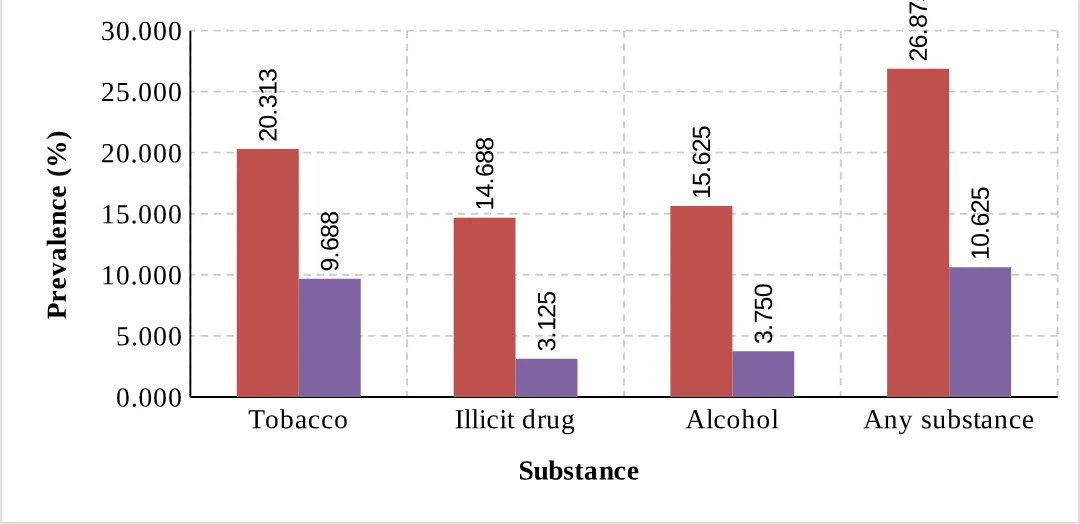
Figure 2 shows a comparison of prevalence for tobacco, illicit drugs, alcohol, and combined. The highest percentage of lifetime exposure was for any substance (26.9%), and the lowest was for illicit drugs (14.7%). The highest current use was for any substance (10.6%), and the lowest was for illicit drugs (3.1%). The largest lifetime-current gap was seen in the combined outcome, suggesting that there was a significant proportion who had tried but not used in the past month. Tobacco was the primary current substance (9.7%), and combined prevention must not diminish drug demand reduction to smoking.
5.2 Distributional inequalities
This dimension examines gender and academic-group variation because overall averages conceal concentrated burden. The comparison is descriptive; it serves for programme monitoring and not for individual classification. Five subgroups are compared in Figure 3.
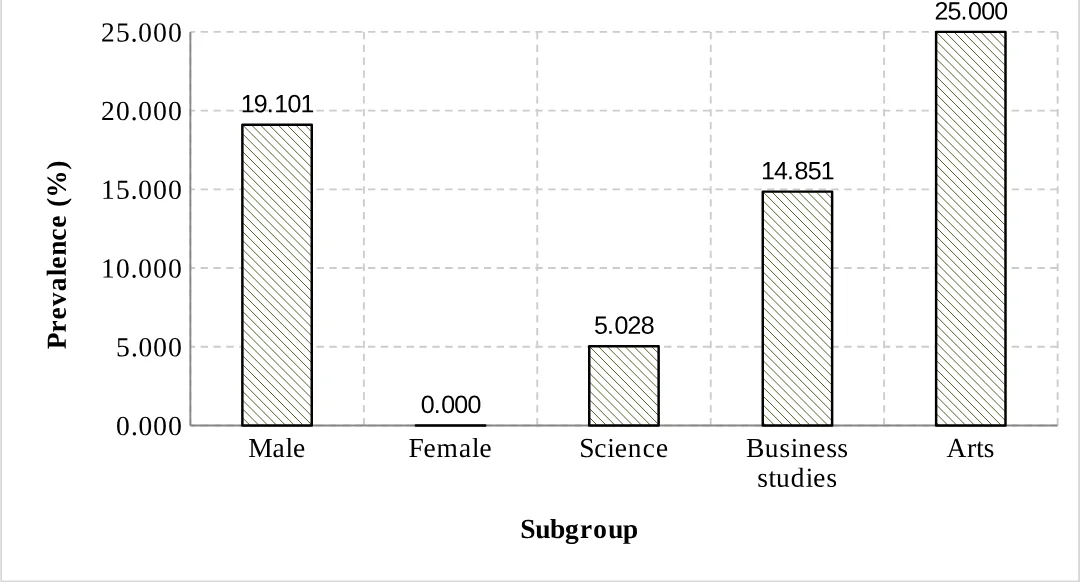
The arts group had the highest current use frequency (25.0%), as did male students (19.1%), with none of the female students in the sample reporting current use. Across academic groups, current use increased from 5.0% in science to 14.9% in business studies and 25.0% in arts. These differences support stratified programme monitoring, while the absence of current-use reports among female students in this sample highlights the potential for disclosure effects and sparse-cell instability. Equity auditing is thus required for gender and track as opposed to individual profiling.
5.3 Co-occurrence and accumulation of observable signals
This dimension explores the grouping of substances and visible signals since it is more defensible as an inquiry prompt than an isolated behaviour. The number of substances in a response indicates the complexity of the response, and the comparisons between routine and academic highlight prevalence differences that are not adjusted for the number of substances. Patterns of co-occurrence and of selected unadjusted patterns are presented in Table 2.
Table 2. Substance co-occurrence and selected unadjusted patterns
| Analytical pattern | Category | n | Current users, n | Percentage, % |
|---|---|---|---|---|
| Current substance count | None | 286 | Not applicable | 89.4 of analytic sample |
| One substance | 21 | Not applicable | 6.6 of analytic sample | |
| Two substances | 7 | Not applicable | 2.2 of analytic sample | |
| Three substances | 6 | Not applicable | 1.9 of analytic sample | |
| Device use | <4 hours/day | 256 | 20 | 7.8 |
| >=4 hours/day | 64 | 14 | 21.9 | |
| Bedtime | By midnight | 216 | 18 | 8.3 |
| After midnight | 104 | 16 | 15.4 | |
| Academic group | Science | 179 | 9 | 5.0 |
| Non-science | 141 | 25 | 17.7 |
Most students reported no current use, while a smaller subgroup reported use across two or three substance classes, indicating greater response complexity. Current use was more concentrated among students with high device use, late bedtime, and non-science study, but these unadjusted patterns do not support deterministic classification. Instead, they reinforce the rationale for multi-signal assessment. Figure 4 examines whether risk increased in an ordered manner as observable signals accumulated.
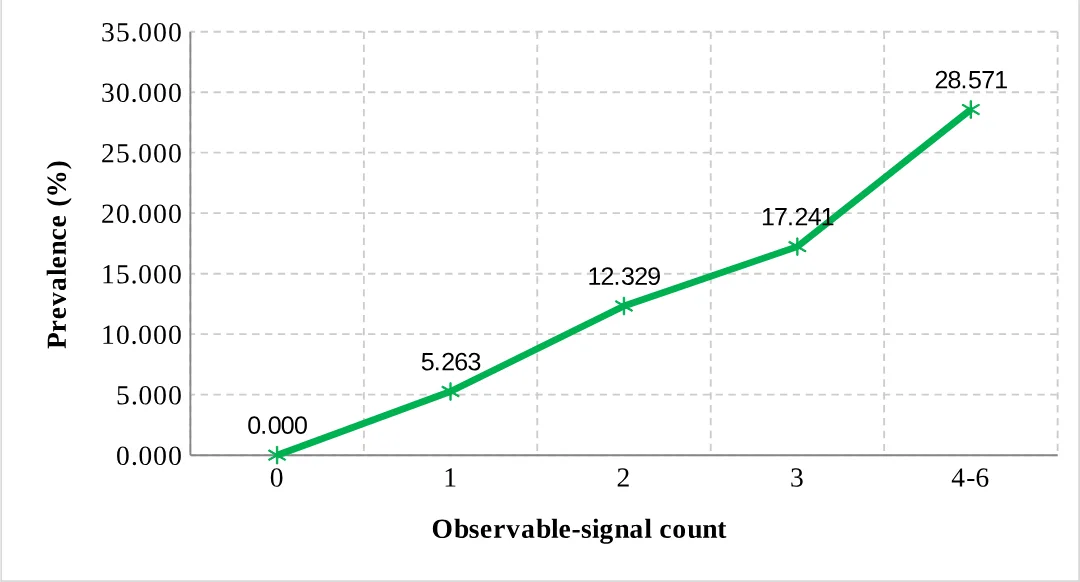
Students with no signals did not have any current users. As the number of signals increased, so did the prevalence, from 5.3% with one signal to 12.3% with two signals, 17.2% with three signals, and 28.6% with four to six signals. The ordered gradient is a more useful pattern for the teacher because it identifies accumulation, not one characteristic. Even the highest category was not a sure thing and further emphasized the need for confidential inquiry before referral.
5.4 Independent multivariable relationships
This dimension estimates adjusted relationships because bivariate differences overlap. Simultaneous estimation is used to estimate each of the prespecified signals from the other predictors. Table 3 shows the adjusted odds ratios, confidence intervals, and probability values.
Table 3. Multivariable logistic regression for current substance use
| Predictor | Adjusted odds ratio | 95% CI | p value |
|---|---|---|---|
| Non-science academic group | 3.890 | 1.669-9.066 | 0.002 |
| Irregular tooth brushing | 1.995 | 0.901-4.414 | 0.088 |
| Device use >=4 hours/day | 1.783 | 0.767-4.145 | 0.179 |
| Bedtime after midnight | 1.974 | 0.870-4.480 | 0.104 |
| Sleep latency >=30 minutes | 1.281 | 0.582-2.817 | 0.538 |
| Low family influence | 1.874 | 0.637-5.514 | 0.254 |
The strongest adjusted relationship was observed in the non-science study, and the only estimate with a confidence interval that did not include unity was in the non-science study. The next largest point estimates were for irregular tooth brushing and late bedtime, with intervals that were compatible with no independent relationship. The use of devices was also not precise, as was the family influence and the duration of sleep latency. The model therefore supports combined prediction and contextual inquiry, not independent case finding from any single signal.
5.5 Predictive discrimination and calibration
This dimension assesses out-of-sample ranking, as association is not enough for a support pathway. Internal validation tests separation in held-out observations. The nested cross-validated receiver-operating-characteristic curve is shown in Figure 5.
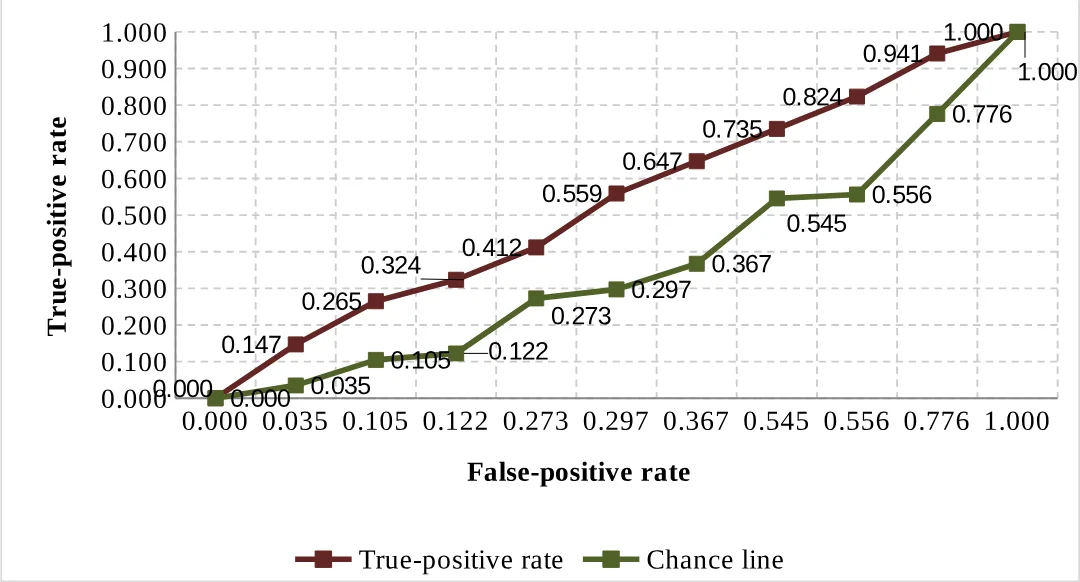
The curve was still above the chance diagonal, and the area under the curve was 0.687, with a bootstrap 95% interval of 0.592 to 0.775. Performance was not diagnostic, but rather modest. The wide gap between users and non-users precludes stand-alone automated decisions, and the ranking ability is adequate to test a pathway for human review. The accuracy of the probability is not determined by the rank, so grouped mean predicted probabilities are compared with observed current-use proportions in Figure 6.
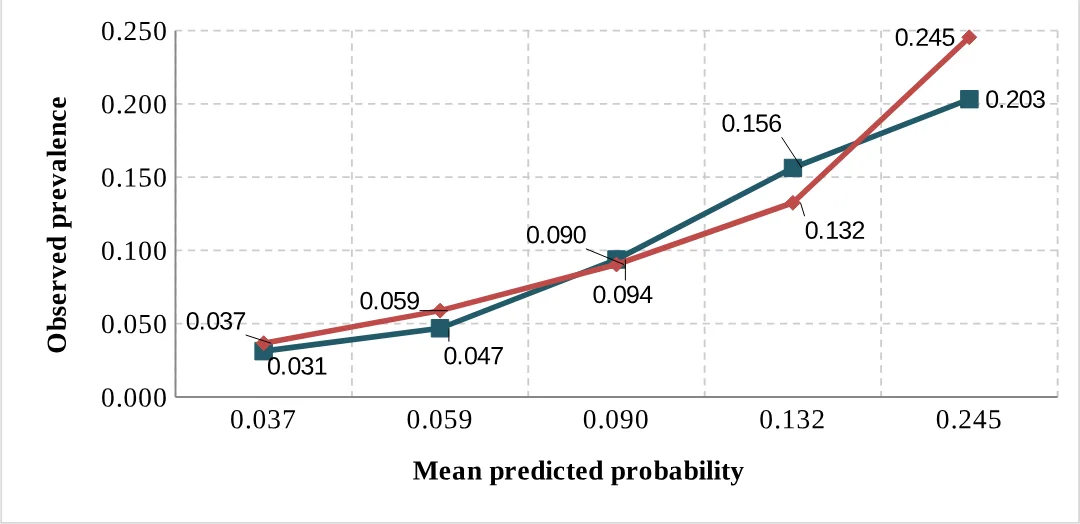
Calibration was close to the ideal line at low and middle predictions, and was off in the upper range. Average overprediction was mild with intercept -0.192 and slope 0.935, and there was little distortion of extremities. The aggregate error was acceptable at 0.090 (95% interval 0.067-0.116) for internal research, but local recalibration is required before external use. The operating characteristics at the data-derived descriptive review threshold of 9.9% are shown in Table 4.
Table 4. Operating characteristics at the 9.9% review threshold
| Metric | Value, % | Operational interpretation |
|---|---|---|
| Sensitivity | 70.6 | About seven in ten current users flagged |
| Specificity | 62.6 | Moderate avoidance of unnecessary review |
| Positive predictive value | 18.3 | Most flagged students were non-users |
| Negative predictive value | 94.7 | A negative result strongly ruled out current use |
| Accuracy | 63.4 | Overall classification remained modest |
The contrast between the high negative predictive value and the low positive predictive value indicates that the model is better suited to ruling out lower-risk students than confirming current use. A binary cut-off would generate many unnecessary reviews; probabilities should therefore support stepped, confidential review rather than accusation or punishment.
5.6 Tiered teacher-response implications
This dimension looks at the distribution of students and users across action tiers, as staffing and proportionality are related to the size of the tiers. The percentage of all students to current users indicates if each tier is focusing on need without overwhelming the review process. This comparison is shown in Figure 7.
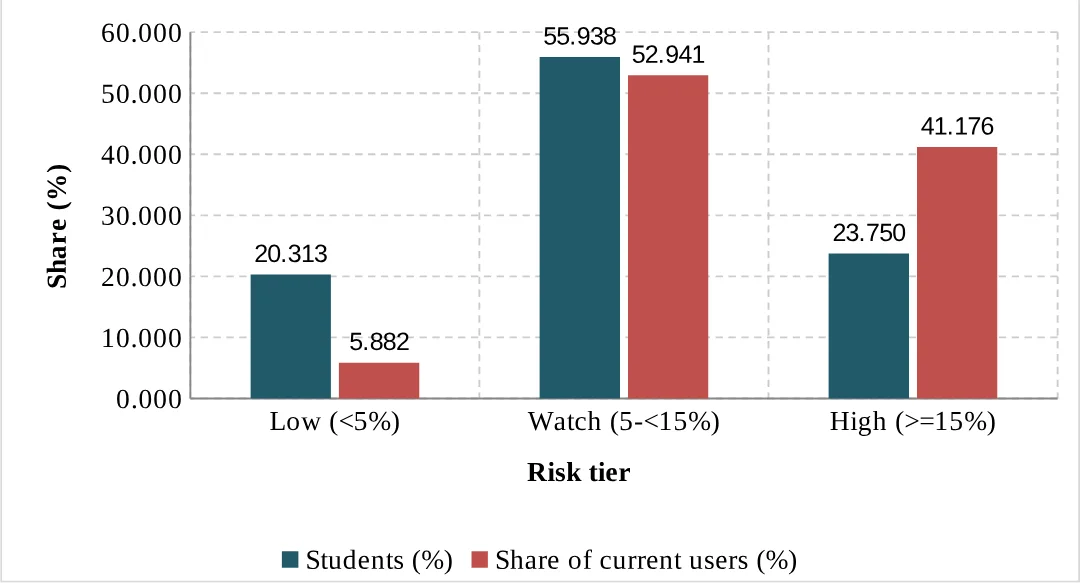
The high tier had 23.8% of the students and 41.2% of current users. The watch tier contained 55.9% of students and 52.9% of current users, while the low tier contained 20.3% of students and 5.9% of users. Watch and high tiers together captured 94.1% of users. This distribution is designed for universal prevention for all, brief teacher check-in for the watch tier, and designated safeguarding review for the high tier. The watch tier is large, and the high tier is not very specific, so staged implementation and workload monitoring will still be needed.
6. Discussion
The analysis redefines the role of teachers in drug demand reduction in Bangladesh as universal prevention, attentive observation, supportive conversation, and governed referral. The observed pattern is consistent with reported substance-specific heterogeneity in local substance-use behaviour (Moonajilin et al., 2021) and the present analysis extends this evidence by linking co-occurrence and signal accumulation with out-of-fold validation, calibration, and operational triage within a consistent sample.
The results of this adjusted analysis should be interpreted with caution. Academic-group differences could be due to opportunity structures, expectations, peer context, or reporting, not to the inherent risk of a track. After mutual adjustment, the direction of the relationships remained positive for device use, bedtime, self-care, sleep latency and family influence, but were not statistically significant. The sequential progression from signals, however, is consistent with the assumption of TEPER that the sequential change in ecological processes is more informative than a single observation. This mechanism is consistent with implementation research that demonstrates that teacher practice is most effective when there are structures at the school level (Layland et al., 2022). Although there was a difference in description, gender was not included in prediction because it is essential that prevention is equitable and not based on suspicion.
The methodological contribution is the separation of association from predictive performance and operational use. Nested validation showed that the model can support ranking for human review but cannot justify stand-alone decisions. Its false-positive burden makes it unsuitable for sanctions, searches, peer disclosure, or labelling; elevated risk should initiate only a confidential wellbeing check-in, with any escalation based on supportive conversation and safeguarding judgement rather than the score alone. The results are consistent with the implementation synthesis, which focuses on training, organizational climate and role clarity (Waller et al., 2017).
The risk tiers are used to implement that distinction. A universal layer ensures that no reliance is placed on imperfect prediction, and normalises the drug literacy, refusal skills, coping and help-seeking. The watch tier provides a framework of teacher follow-up for common disruptions or disengagement. High-tier routes are routes that the designated safeguarding lead, counsellor or health professional is concerned about. Training research indicates that teachers are best positioned to identify students when decision rules are used in conjunction with training (von der Embse et al., 2018). Long-term prevention trials also support the idea of a combination of universal and selective components as opposed to choosing one.
These tiers also provide an explanation of programme theory. Universal lessons target population norms and competencies; watch-tier contact targets emerging disruption and willingness to seek help; high-tier review targets safe linkage and interruption of escalation. The mechanisms are different, and there are different measures for each of the following: reach, fidelity, quality of the conversation, referral uptake, student outcomes. If there is no change in prevalence, it will not be possible to determine which link failed. Similarly, if there is a greater number of referrals during early rollout, this may be due to better recognition of the drug use, and not necessarily due to an increase in drug use. Process and outcome measures must thus be read in conjunction with each other.
There are multiple comparisons that can be made and interpreted. Skills-based programmes demonstrate durable effects in well-resourced trial systems, whereas transfer into Bangladesh faces larger classes, limited counsellor availability, examination pressure, and variable referral access. Results from a Mexican school programme confirm that the essential mechanisms are retained, as well as the local language, scenarios, family structures, and substances. In contrast, when fidelity is reduced to dose, there are weak or inconsistent outcome relationships reported in fidelity studies. The key elements of fidelity, as defined by TEPER, are: interactive delivery, non-stigmatising observation, confidential conversation, documented escalation, and completed referral.
The implications of a policy go beyond teacher training. School leaders require protected time, referral agreements, privacy rules, and incident-review governance. A district service map and a shared minimum protocol are needed by health and education authorities. Model use also needs to be periodically reviewed for equity by gender and academic group, as differential disclosure or staff judgement may result in the same differentials as seen here. Stepped care focuses specialist capacity on higher need reviews, and maintains low-cost universal provision, economically. Socially, a supportive approach helps to minimize exclusion, and to maximize the likelihood of voluntary help-seeking. The design is an implementation hypothesis – only school randomisation of the design with teacher, process, student and adverse-event measures will confirm impact.
7. Conclusion
The school response to adolescent substance use in Bangladesh needs to be both preventive and early and proportionate. A reproducible stratified sample of 320 Grade XI students was analysed, and the results of the descriptive, multivariable and internally validated predictive results were translated into a teacher-centred framework. 10.6% were currently using combined products, and 26.9% had ever used combined products. The adjusted relationship was most clearly evident for non-science study, while the other signal estimates were not very precise. However, there was an increase in risk in the groups of signals accumulated. The compact model discriminated very little, had a good internal calibration, a good negative predictive value, and a poor positive predictive value.
This is not a diagnostic score, but the principal contribution. It is a bounded model of implementation where teachers provide universal prevention, identify changes over time, start private supportive conversations, and escalate serious concerns through safeguarding and referral processes. This formulation links epidemiological patterning to role clarity while rejecting punishment, demographic profiling, and single-signal inference.
The limitations are: cross-sectional self-report, one regional sample of Grade XI, complete record eligibility, stratified subsampling, lack of teacher and school process measures, lack of external validation, and lack of measured clustering. There were only 34 current users available, leading to increased uncertainty over subgroup and adjusted estimates. Geographically diverse prospective cohorts, student-teacher linked data, acceptability studies, assessment of fairness, cost analysis and cluster-randomised implementation trials are needed in the future. Such research would determine if TEPER increases the likelihood of delayed initiation, supports help-seeking, student retention and referral completion, and does not lead to stigma or unintended disclosure.
Conflict of Interest
The authors declare no conflict of interest.
Declaration of AI and AI-Assisted Technologies in the Writing Process
During the preparation of this manuscript, AI-assisted language tools were used for grammar refinement, stylistic readability, and organizational editing. The study design, secondary data curation, statistical analyses, model validation, and substantive interpretation remain the responsibility of the author(s). The author(s) reviewed and approved the final manuscript and accept full responsibility for its accuracy and integrity.
References
- Al-Mamun, F., Al Habib, A., Islam, J., ALmerab, M. M., Mamun, M. A., & Muhit, M. (2025). Lifetime and past-year suicidal behaviors among adolescents in Bangladesh: A two-stage stratified cluster sampling study. Cambridge Prisms: Global Mental Health, 12, e24. https://doi.org/10.1017/gmh.2025.10 Árva, D., Vokó, Z., Sápi, M., Cselkó, Z., & Rákosy, Z. (2024). The influence of institutional characteristics on implementing school-based universal addiction prevention: A Hungarian mixed-methods nationwide study on the state of implementation, barriers, and facilitators. Frontiers in Education, 8, 1240909. https://doi.org/10.3389/feduc.2023.1240909
- Athauda, L., Verdun, Z., Atanasova, P., Ahmad, S., Ahsan, A., Hossain, M. M., Loomba, M., Pradeepa, R., Rajakaruna, V., Kaluarachchi, M., Kasturiratne, A., Khawaja, K. I., Mridha, M. K., Katulanda, P., Jha, V., Anjana, R. M., Chambers, J. C., Frost, G., Sassi, F., & Miraldo, M. (2025). Compliance to tobacco and alcohol zoning regulations around schools in Bangladesh, India, Pakistan and Sri Lanka using environmental mapping data. BMC Medicine, 23(1), 307. https://doi.org/10.1186/s12916-025-04148-1
- Bailey, S., Newton, N. C., Perry, Y., Lin, A., Grummitt, L., & Barrett, E. L. (2024). Mental ill-health and substance use among sexuality diverse adolescents: The critical role of school climate and teacher self-efficacy. Australian & New Zealand Journal of Psychiatry, 58(2), 162–174. https://doi.org/10.1177/00048674231202427
- Bantwal, P., Kulkarni, M. M., Kamath, V. G., Jay, R., Jois, G. S., Sekar, N., Shankar, M. V., Bajwa, D. S., Bhagawath, R., & Naik, A. K. (2025). Interventions for Preventing Tobacco Uptake among Adolescents within School Setting in South-East Asia region: A Systematic Review. Child & Youth Care Forum, 54(2), 545–569. https://doi.org/10.1007/s10566-024-09830-8
- Beamon, E. R., Henson, R. A., Kelly, S. E., Hansen, W. B., & Wyrick, D. L. (2023). Fidelity of D.A.R.E. Officers’ Delivery of “keepin’ it REAL” in Elementary & Middle School. Prevention Science, 24(5), 985–998. https://doi.org/10.1007/s11121-023-01548-8
- Cadri, A., Beema, A. N., Schuster, T., Barnett, T., Asampong, E., & Adams, A. M. (2024). School‐based interventions targeting substance use among young people in low‐and‐middle‐income countries: A scoping review. Addiction, 119(12), 2048–2075. https://doi.org/10.1111/add.16623
- Champion, K. E., Parmenter, B., McGowan, C., Spring, B., Wafford, Q. E., Gardner, L. A., Thornton, L., McBride, N., Barrett, E. L., Teesson, M., Newton, N. C., Chapman, C., Slade, T., Sunderland, M., Bauer, J., Allsop, S., Hides, L., Stapinksi, L., Birrell, L., & Mewton, L. (2019). Effectiveness of school-based eHealth interventions to prevent multiple lifestyle risk behaviours among adolescents: A systematic review and meta-analysis. The Lancet Digital Health, 1(5), e206–e221. https://doi.org/10.1016/s2589-7500(19)30088-3
- Combs, K. M., Buckley, P. R., Lain, M. A., Drewelow, K. M., Urano, G., & Kerns, S. E. U. (2022). Influence of Classroom-Level Factors on Implementation Fidelity During Scale-up of Evidence-Based Interventions. Prevention Science, 23(6), 969–981. https://doi.org/10.1007/s11121-022-01375-3
- Debenham, J., Champion, K., Birrell, L., & Newton, N. (2022). Effectiveness of a neuroscience-based, harm reduction program for older adolescents: A cluster randomised controlled trial of the Illicit Project. Preventive Medicine Reports, 26, 101706. https://doi.org/10.1016/j.pmedr.2022.101706
- Ezomo, O. D., & Prinsloo, C. (2025). Empowering educators: Addressing drug abuse among students in Technical and Vocational Education and Training (TVET) colleges. International Journal of Training Research, 23(3), 173–186. https://doi.org/10.1080/14480220.2024.2373147
- Gusmoes, J. D., Garcia-Cerde, R., Valente, J. Y., Pinsky, I., & Sanchez, Z. M. (2022). Implementation fidelity of a Brazilian drug use prevention program and its effect among adolescents: A mixed-methods study. Substance Abuse Treatment, Prevention, and Policy, 17(1), 71. https://doi.org/10.1186/s13011-022-00496-w
- Hanif, R., Kliewer, W., & Cyrus, J. W. (2025). Interventions targeting adolescent substance use and misuse in South Asian Countries: A systematic review. Drug and Alcohol Dependence, 269, 112614. https://doi.org/10.1016/j.drugalcdep.2025.112614
- Hossain, S., Beard, E., & Shahab, L. (2025). Intervention for adolescent tobacco initiation prevention (IATIP) to promote health and well-being: A protocol for a pilot cluster randomised controlled trial in Dhaka, Bangladesh. Pilot and Feasibility Studies, 11(1), 145. https://doi.org/10.1186/s40814-025-01710-9
- Hossain, S., Chowdhury, P. B., Mohsin, Md., & Biswas, R. K. (2024). Addictive behavior and mental health of adolescents aged 11–17 years in Bangladesh in 2014: A cross‐sectional study. Health Science Reports, 7(7), e2231. https://doi.org/10.1002/hsr2.2231
- Hossain, S., Tattan-Birch, H., Beard, E., & Shahab, L. (2025). Evaluating School-Based Interventions for Preventing and Reducing Tobacco Use Among Adolescents in Low- and Middle-Income Countries: A Systematic Review and Meta-Analysis. American Journal of Preventive Medicine, 69(2), 107656. https://doi.org/10.1016/j.amepre.2025.107656 Khan, Md. M. A., Rahman, Md. M., Jeamin, S. S., Mustagir, Md. G., Haque, Md. R., & Kaikobad, Md. S. (2020). Psychosocial and socio-environmental factors associated with adolescents’ tobacco and other substance use in Bangladesh. PLOS ONE, 15(11), e0242872. https://doi.org/10.1371/journal.pone.0242872
- Kulis, S. S., Jager, J., Marsiglia, F. F., Campos, A. P., & Medina-Mora, M. E. (2025). Efficacy of the Mexican version of the keepin’ it REAL school-based prevention program in addressing multi-substance use from early to mid-adolescence. Drug and Alcohol Dependence, 271, 112655. https://doi.org/10.1016/j.drugalcdep.2025.112655
- Layland, E. K., Caldwell, L. L., Ram, N., Smith, E. A., Wegner, L., & Jacobs, J. J. (2022). Adolescent Substance Use Behavior Change Through School Intervention Is Improved by Teacher and School Implementation Support Together, Especially for Girls. Prevention Science, 23(7), 1251–1263. https://doi.org/10.1007/s11121-022-01394-0
- Mishu, M. P., Jackson, C., McNeill, A., Garg, S., Borle, A., Deshmukh, C., Singh, M. M., Bhatnagar, N., Kaushik, R., Huque, R., Fieroze, F., Kanan, S., Abdullah, S. M., Mazhar, L., Akhter, Z., Rehman, K., Ullah, S., Han, L., Readshaw, A., … Iqbal, R. (2024). Conducting tobacco control surveys among schoolchildren in Bangladesh, India and Pakistan: A feasibility study. PLOS Global Public Health, 4(10), e0003784. https://doi.org/10.1371/journal.pgph.0003784 Moonajilin, Mst. S., Kamal, M. K. I., Mamun, F. al, Safiq, M. B., Hosen, I., Manzar, Md. D., & Mamun, M. A. (2021). Substance use behavior and its lifestyle-related risk factors in Bangladeshi high school-going adolescents: An exploratory study. PLOS ONE, 16(7), e0254926. https://doi.org/10.1371/journal.pone.0254926
- Newton, N. C., Stapinski, L. A., Slade, T., Sunderland, M., Barrett, E. L., Champion, K. E., Chapman, C., Smout, A., Lawler, S. M., Mather, M., Debenham, J., Castellanos-Ryan, N., Conrod, P. J., & Teesson, M. (2022). The 7-Year Effectiveness of School-Based Alcohol Use Prevention From Adolescence to Early Adulthood: A Randomized Controlled Trial of Universal, Selective, and Combined Interventions. Journal of the American Academy of Child & Adolescent Psychiatry, 61(4), 520–532. https://doi.org/10.1016/j.jaac.2021.10.023
- Nicholson, J. (2025). Young people affected by drug use: Implications for teacher education. Journal of Education for Teaching, 51(3), 417–431. https://doi.org/10.1080/02607476.2025.2480087
- Nordmyr, J., & Forsman, A. K. (2021). Roles and responsibilities in substance use prevention in the school setting: Views among Finnish school personnel representatives. Scandinavian Journal of Primary Health Care, 39(3), 305–314. https://doi.org/10.1080/02813432.2021.1935516 Rahman, Md. M., Rahman, Md. M., Khan, Md. M. A., Hasan, M., & Choudhury, K. N. (2020). Bullying victimization and adverse health behaviors among school‐going adolescents in South Asia: Findings from the global school‐based student health survey. Depression and Anxiety, 37(10), 995–1006. https://doi.org/10.1002/da.23033
- Sanchez, Z. M., Valente, J. Y., Galvão, P. P., Gubert, F. A., Melo, M. H. S., Caetano, S. C., Mari, J. J., & Cogo‐Moreira, H. (2021). A cluster randomized controlled trial evaluating the effectiveness of the school‐based drug prevention program #Tamojunto2.0. Addiction, 116(6), 1580–1592. https://doi.org/10.1111/add.15358
- Shrestha, S., Velayudhan, B., YN, S., R, V. L., & Khattri, J. B. (2024). Effectiveness of School-based Substance abuse Prevention Programme (SSPP) on awareness, attitude, peer pressure, and life skills among adolescents in selected public schools of Pokhara, Nepal–A cluster randomized trial protocol. Mental Health & Prevention, 34, 200342. https://doi.org/10.1016/j.mhp.2024.200342
- Singh, L., Jain, P., Kumar, C., Singh, A., Lal, P., Yadav, A., Singh, P. K., & Singh, S. (2023). Trends in age of tobacco use initiation over time in Bangladesh, India and Pakistan: Analysis of cross-sectional nationally representative surveys. BMJ Open, 13(12), e067875. https://doi.org/10.1136/bmjopen-2022-067875
- Stapinski, L. A., Nepal, S., Guckel, T., Grummitt, L. R., Chapman, C., Lynch, S. J., Lawler, S. M., Teesson, M., & Newton, N. C. (2022). Evaluation of Positive Choices, a National Initiative to Disseminate Evidence-Based Alcohol and Other Drug Prevention Strategies: Web-Based Survey Study. JMIR Pediatrics and Parenting, 5(3), e34721. https://doi.org/10.2196/34721 von der Embse, N. P., Kilgus, S. P., Eklund, K., Ake, E., & Levi-Neilsen, S. (2018). Training Teachers to Facilitate Early Identification of Mental and Behavioral Health Risks. School Psychology Review, 47(4), 372–384. https://doi.org/10.17105/spr-2017-0094.v47-4
- Waller, G., Finch, T., Giles, E. L., & Newbury-Birch, D. (2017). Exploring the factors affecting the implementation of tobacco and substance use interventions within a secondary school setting: A systematic review. Implementation Science, 12(1), 130. https://doi.org/10.1186/s13012-017-0659-8
CITE THIS ARTICLE
Rahman, M. B. (2025). Teacher-Led Drug Demand Reduction in Bangladesh: Predictive Modelling and the TEPER Implementation Framework. https://www.bazlurrahman.com/article/c5288961-1804-4224-89ae-ad3d8c3b39f6
M. B. Rahman, “Teacher-Led Drug Demand Reduction in Bangladesh: Predictive Modelling and the TEPER Implementation Framework,” 2025. [Online]. Available: https://www.bazlurrahman.com/article/c5288961-1804-4224-89ae-ad3d8c3b39f6
Rahman, M. B. (2025) ‘Teacher-Led Drug Demand Reduction in Bangladesh: Predictive Modelling and the TEPER Implementation Framework’. Available at: https://www.bazlurrahman.com/article/c5288961-1804-4224-89ae-ad3d8c3b39f6
Rahman, Md. Bazlur. “Teacher-Led Drug Demand Reduction in Bangladesh: Predictive Modelling and the TEPER Implementation Framework.” 2025, https://www.bazlurrahman.com/article/c5288961-1804-4224-89ae-ad3d8c3b39f6.
Md. Bazlur Rahman. “Teacher-Led Drug Demand Reduction in Bangladesh: Predictive Modelling and the TEPER Implementation Framework.” (2025). https://www.bazlurrahman.com/article/c5288961-1804-4224-89ae-ad3d8c3b39f6.
Rahman MB. Teacher-Led Drug Demand Reduction in Bangladesh: Predictive Modelling and the TEPER Implementation Framework. 2025. https://www.bazlurrahman.com/article/c5288961-1804-4224-89ae-ad3d8c3b39f6
@misc{article_c52889611804422489aead3d8c3b39f6,
  title = {Teacher-Led Drug Demand Reduction in Bangladesh: Predictive Modelling and the TEPER Implementation Framework},
  author = {Md. Bazlur Rahman},
  year = {2025},
  url = {https://www.bazlurrahman.com/article/c5288961-1804-4224-89ae-ad3d8c3b39f6},
}
TY - GEN AU - Md. Bazlur Rahman TI - Teacher-Led Drug Demand Reduction in Bangladesh: Predictive Modelling and the TEPER Implementation Framework PY - 2025 UR - https://www.bazlurrahman.com/article/c5288961-1804-4224-89ae-ad3d8c3b39f6 ER -